Hempcrete Meets Furniture Design as Cost and Value Take Centre Stage
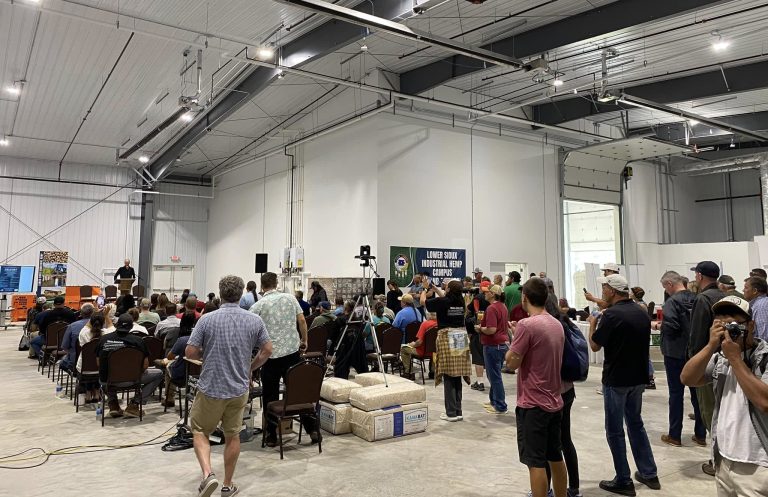
Saturday Indesign 2026 gave hemp building materials an unlikely but fitting stage this year. A furniture showroom. At Bachli Furniture Surry Hills showroom, Murray Industrial Hemp (MIH) and Wild Materials joined for the launch of the Array sofa, using the event to introduce architects, designers and builders to hempcrete blocks, batts and insulation boards in a hands-on setting.

Allan, Rebecca Pistilli, Mark, Leigh Flecther, Sarah Heys, Shane Graham
How the Bachli Collaboration Came Together
Bachli Furniture co-founder Rebecca Pistilli (Bec) had been searching for the right material to stage the Array sofa launch when she came across an image of an overseas hemp block installation. A quick search led her to Murray Industrial Hemp, and within eight weeks the two businesses had built a nature-based wall inside the Bachli showroom. Vapour-open, breathable, and a striking backdrop for the sofa’s own emphasis on considered materials and longevity.
Wild Materials and the Case for Nature-Based Walls
Wild Materials founder Sarah Heys, a licensed builder with over three decades of construction experience, established the business as an agent for MIH after growing frustrated sourcing certified, warrantied natural materials for her own projects. At Bachli, she pointed to the wall behind her as an example of what “building for climate” looks like when treated as a science rather than a baseline. Breathable, vapour-open construction that regulates humidity, insulates thermally, and resists fire and vermin.
Heys also linked the display to a real problem facing new apartment buildings in Sydney: mould caused by tightly sealed, heavily insulated construction that traps condensation. Nature-based materials, she argued, behave like a breathable paper bag rather than a sealed plastic one, letting moisture move instead of building up.
MIH and Wild Materials at Bachli for Sydney Indesign 2026
Cost Versus Value at the Heart of the Conversation
An over lying theme was around ‘cheap is a price’, but ‘value is what a material actually does over the life of a building’. A hempcrete wall that insulates, regulates moisture, dampens sound and stores carbon is doing four jobs at once, and that combined performance, not the upfront figure, is what determines long term results.
MIH managing director Leigh described the material’s thermal and acoustic performance as “second to none,” while Head of Strategy Shane Graham shared a real-world example: a house in Swan Hill, Victoria, built with hemp wall systems, that recorded an annual electricity bill of just $250. For Graham, that’s the paddock-to-place story in practice. Hemp grown regionally, converted into wall systems that keep working long after the builder leaves the site, still reducing energy costs years later.
Positioning Hemp Within the Mainstream Building Industry
Both MIH and Wild Materials were careful to frame hempcrete as complementary to, not a replacement for, current building systems. Graham summed it up simply: the goal isn’t to change the whole industry overnight, just to change the materials within it, a little at a time. Heys connected this to the broader shift already happening in high-performance and passive house construction, describing biophilic, nature-based design as the next logical step, and one that requires the same code-marking and certification work MIH and Wild Materials have been pursuing over the past twelve months.
The Bachli showcase follows MIH’s momentum through 2026, having completed trials and a feasibility study before formally launching in February 2024, and now supplying imported hempcrete blocks and insulation to the Australian market while its own processing facility is established. The team will next take the conversation to HIA in Newcastle, continuing to build the case for whole-of-life thinking in construction materials, the same logic already applied to double glazing, five-star appliances and quality insulation.
MIH and Wild Materials at Bachli for Sydney Indesign 2026 Gallery


FAQ
What is MIH (Murray Industrial Hemp)?
MIH is an Australian hemp building materials company supplying hempcrete blocks and insulation, formally established in February 2024 after several years of trials and feasibility work.
What is Wild Materials?
Wild Materials is a New South Wales-based agency founded by licensed builder Sarah Heys, representing MIH’s hempcrete products to architects, designers and builders.
Why did Bachli Furniture use hempcrete for the Array sofa launch?
Bachli Furniture wanted a backdrop that reflected the Array sofa’s own focus on considered, long-lasting materials, and found that hempcrete’s environmental credentials aligned with that message.
Is hempcrete more expensive than standard building materials?
Hempcrete can cost more upfront, but its insulation, moisture regulation and acoustic performance can lower long-term energy costs, as illustrated by a Victorian home with a $250 annual electricity bill.
Does hempcrete help with mould problems in tightly sealed buildings?
Yes. Hempcrete’s vapour-open, breathable structure allows moisture to pass through rather than accumulate, which can reduce the condensation issues linked to mould in tightly sealed, heavily insulated buildings.
Disclaimer
HBD do not warrant the quality or experience of anyone listed on this directory.
We have relied on the information provided by the business and its representatives.
This site is not intended to provide and does not constitute building advice, or other professional advice.