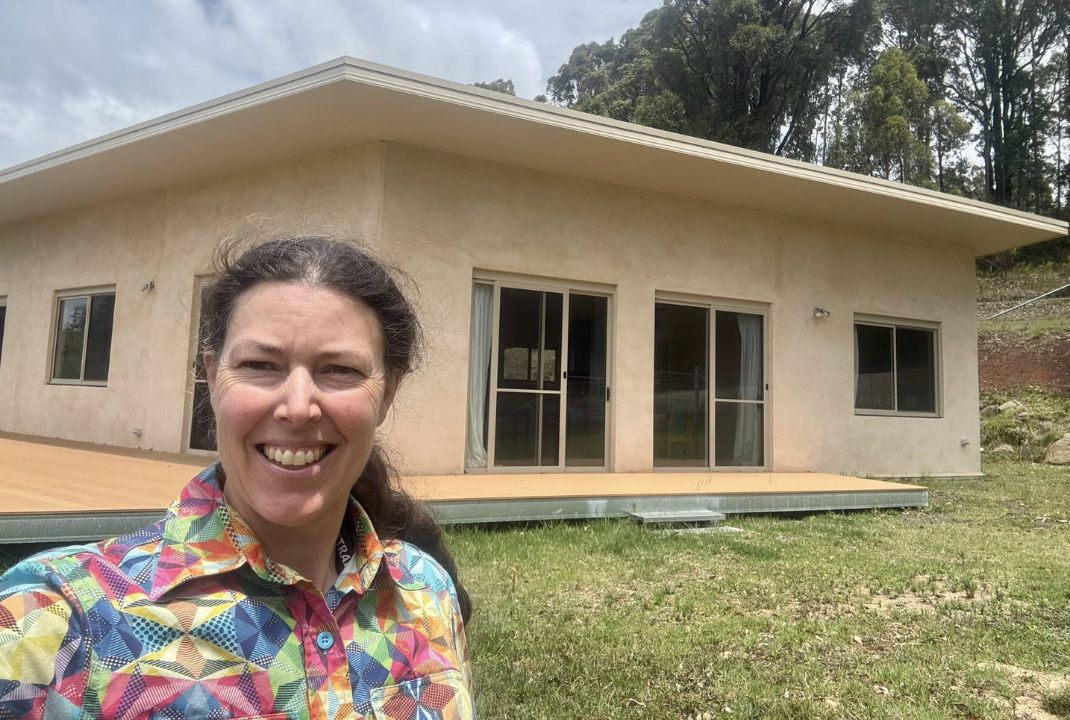
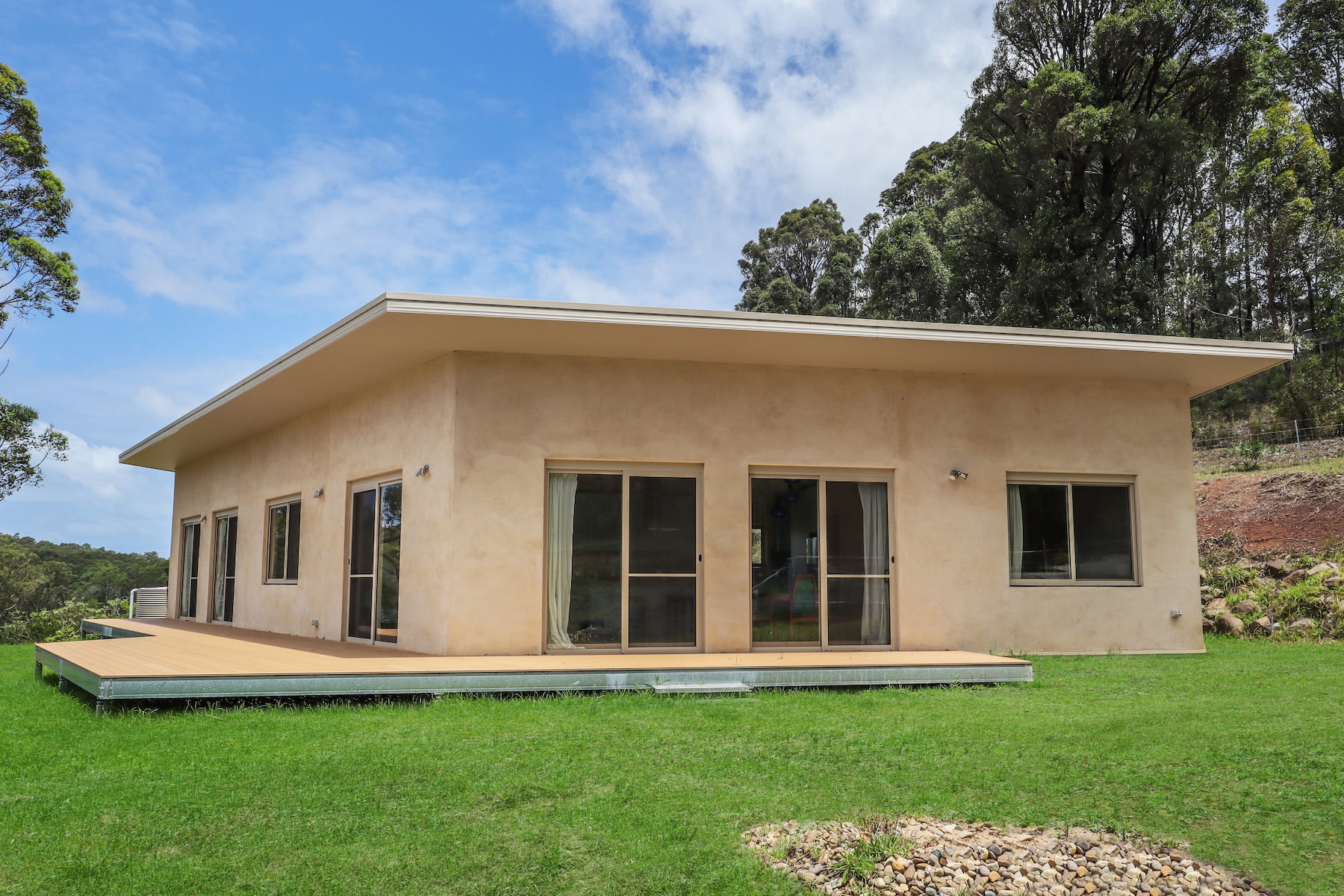
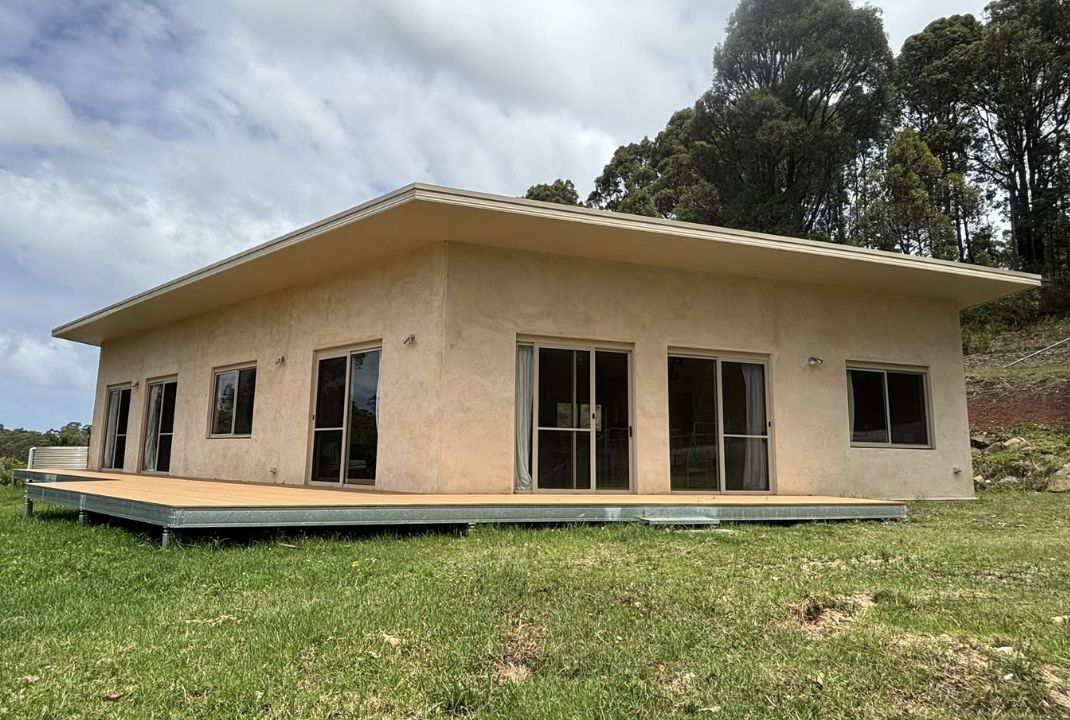
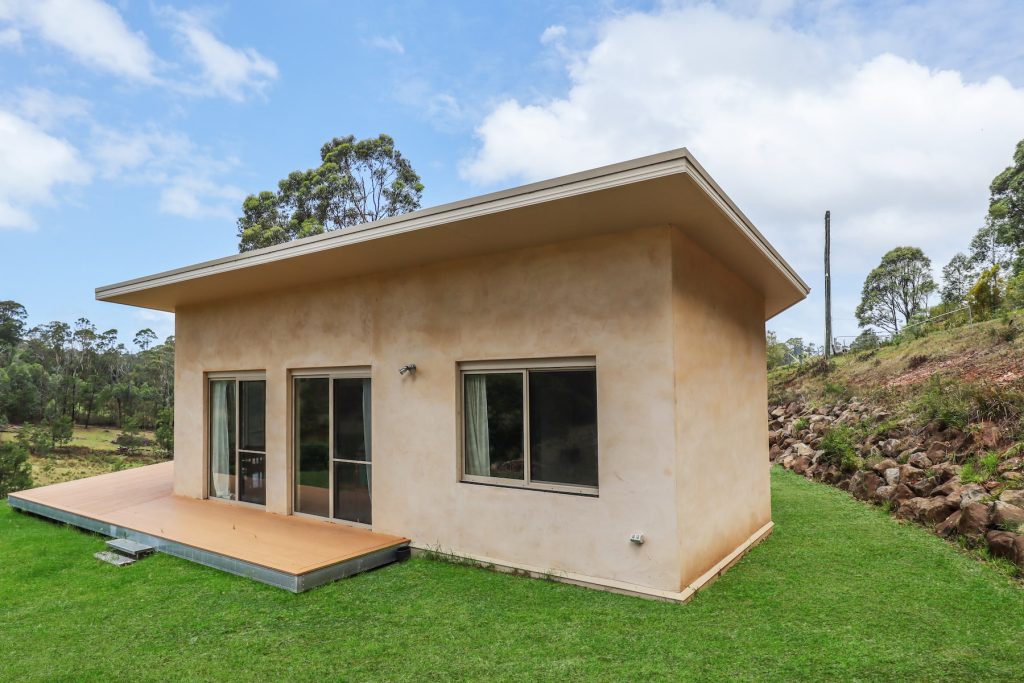
On the South Coast of New South Wales, where bushland meets the sea and the scars of the 2019 Black Summer fires are still visible, a quiet but powerful rebuilding story is unfolding. This newly completed hempcrete home, designed by Shelter Building Design, stands as a practical response to climate risk, bushfire resilience, and the desire to rebuild not just what was lost, but something better.
The original house on this site was destroyed in the 2019 bushfires. In the aftermath, the owners faced a decision familiar to many Australians in fire-prone regions: rebuild the same way and hope for a different outcome, or rethink materials, design, and long-term performance. They chose the latter, opting for a home built primarily from hempcrete, a non-combustible, breathable, and carbon-storing building material.
Designing for Fire First, and Sustainability Second
The brief to Shelter Building Design was clear: the new home needed to be non-combustible and suitable for a high Bushfire Attack Level (BAL) rating. But fire safety wasn’t the only driver. The owners also wanted to reduce energy use, lower ongoing living costs, and build in a way that aligned with their environmental values.
Hempcrete offered a compelling solution. While made from a plant-based material, hempcrete achieves some of the highest fire ratings available when properly detailed. Unlike conventional materials, it does not burn, melt, or release toxic smoke. In a bushfire context, that matters.
Another often-overlooked bushfire benefit of hempcrete is its solid, monolithic nature. Unlike conventional lightweight construction, hempcrete walls contain no cavities where embers can lodge, smoulder, and ignite from within. This significantly reduces one of the most common causes of house loss during bushfire events (ember attack) and adds an extra layer of passive fire protection without relying on additional linings or complex detailing.
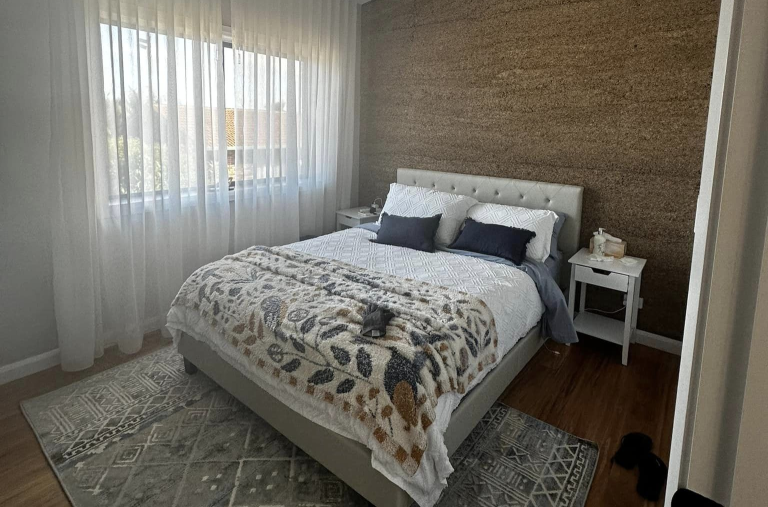
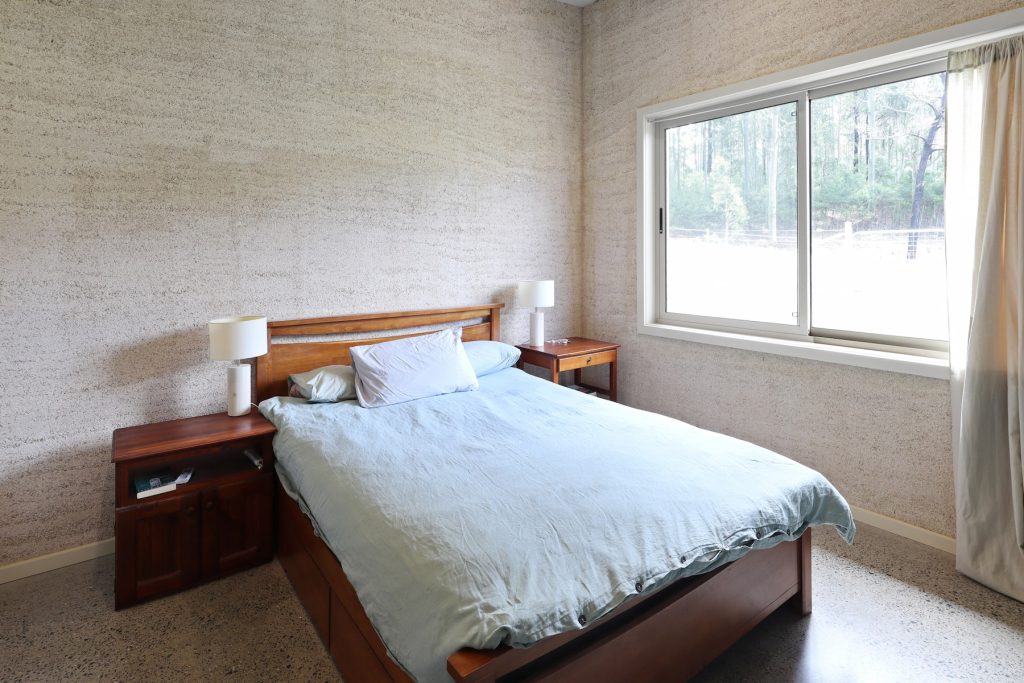
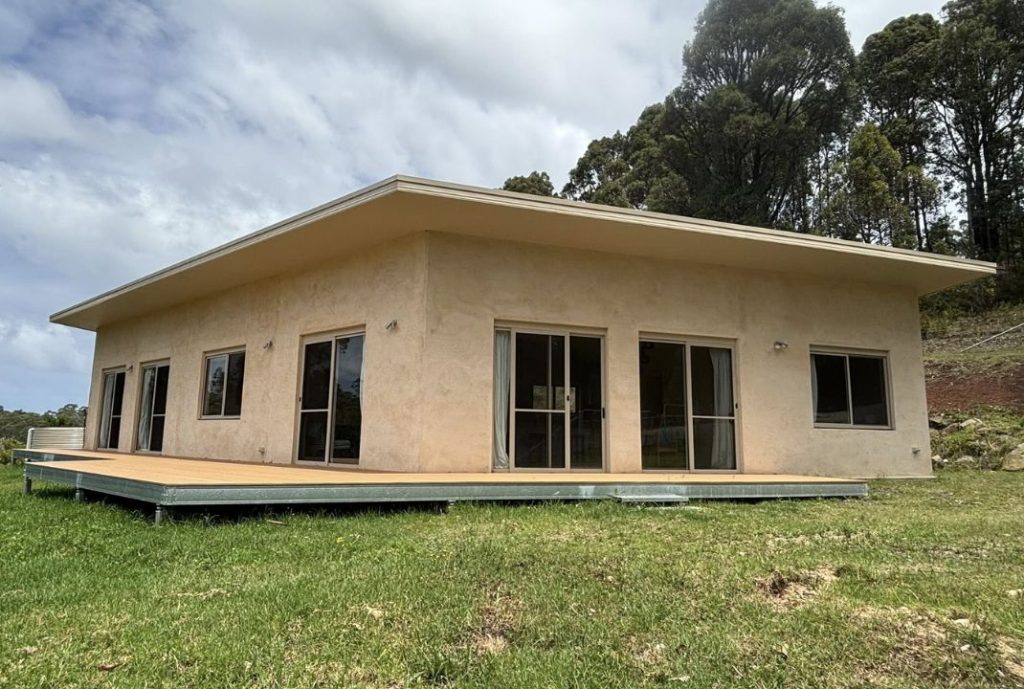
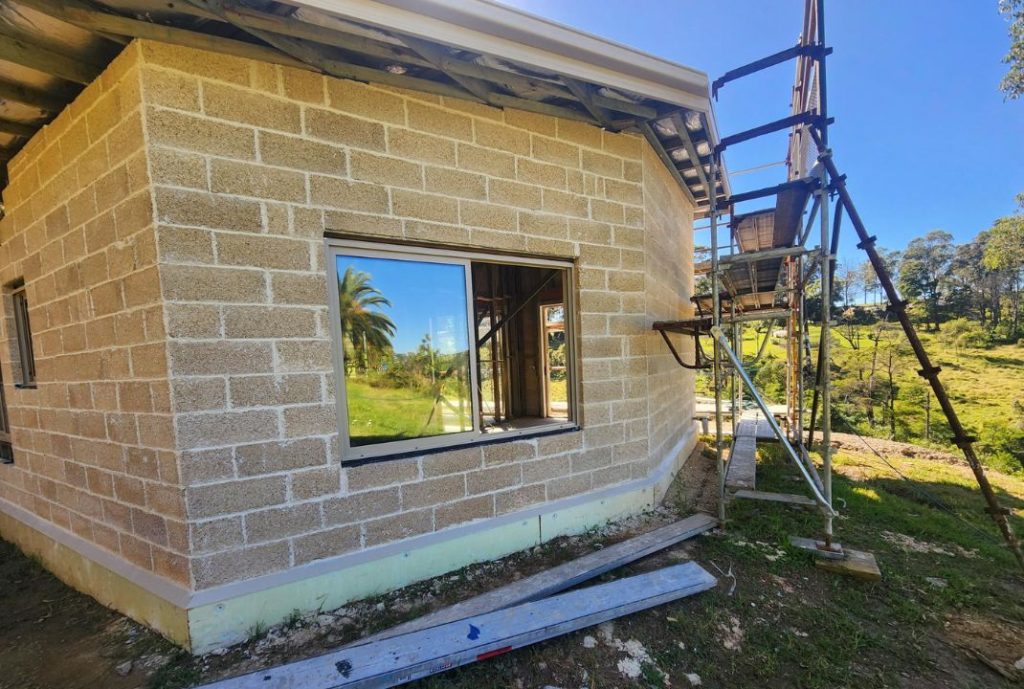
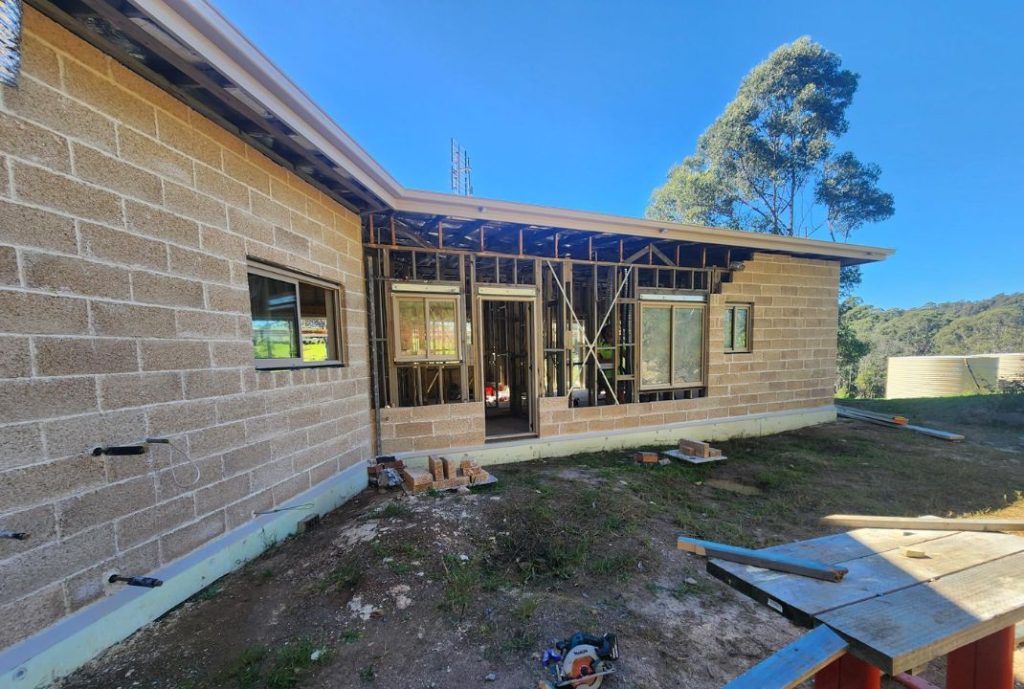
The home’s exterior walls are constructed using Respirabuilt hempcrete blocks, rendered with a lime base render. While cast-in-situ hempcrete has been left exposed on parts of the interior. This hybrid approach balances performance, cost, and build efficiency, showing how hemp building systems are evolving beyond one-size-fits-all methods.
A Hybrid Hempcrete System That Makes Sense
Traditional cast-in-situ hempcrete delivers excellent thermal and acoustic performance but can be labour-intensive. By using prefabricated hempcrete blocks externally and cast hempcrete internally, this project reduced on-site formwork, labour time, and overall complexity, without compromising and potentially increasing performance.
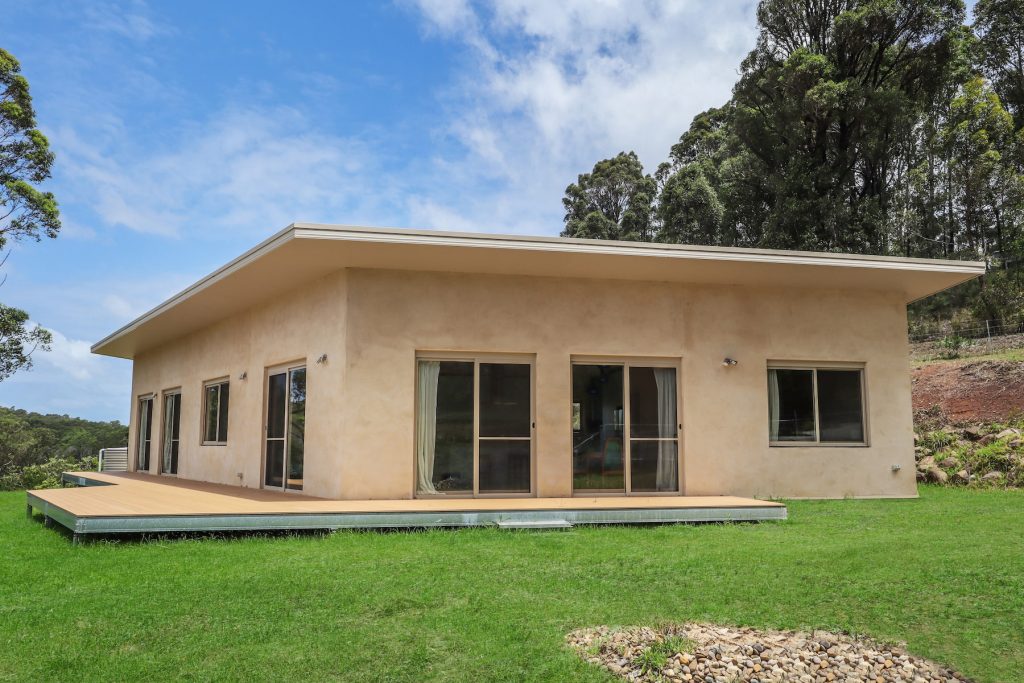
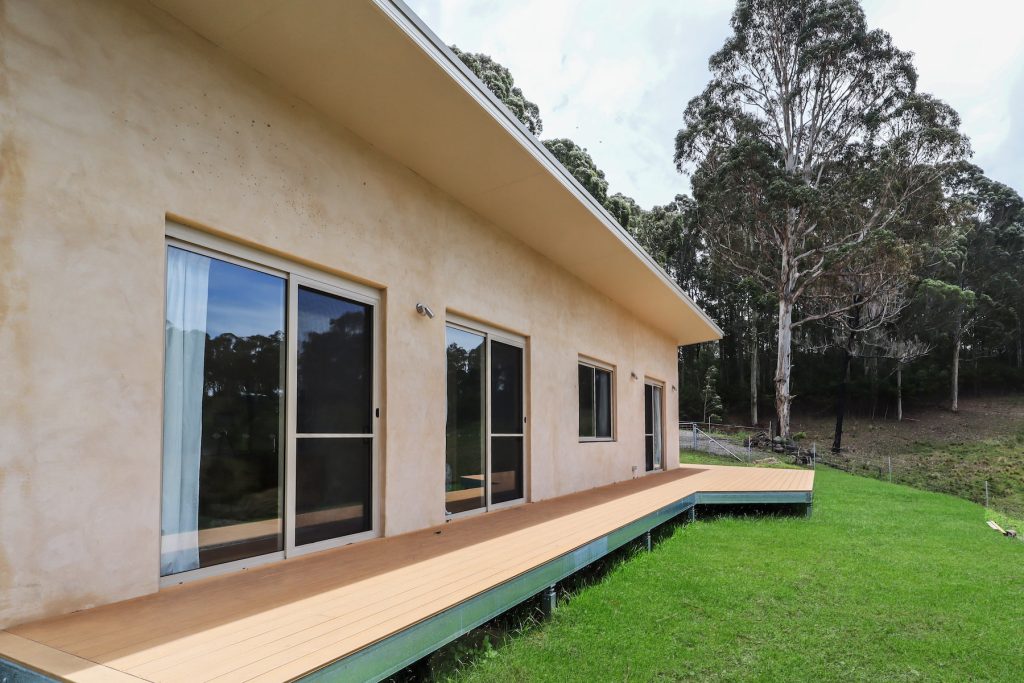
The hempcrete walls wrap around a timber frame, with all components detailed to meet bushfire requirements. Combined with fire-rated decking, ember-proof detailing, protected gutters, and careful siting, the house demonstrates how natural materials can meet, and exceed, stringent safety standards.
This approach also helps make hemp building more accessible. As prefabricated systems mature, they open the door for more people in fire-prone areas to consider hempcrete without the premium often associated with fully cast systems.
Comfort You Can Feel, and Hear
One of the most immediate sensations inside the house is quiet. Hempcrete walls absorb sound, reducing echo and reverberation and creating calm, acoustically comfortable spaces. Moving from one room to another, the difference is noticeable – particularly in spaces intended for rest or media use.
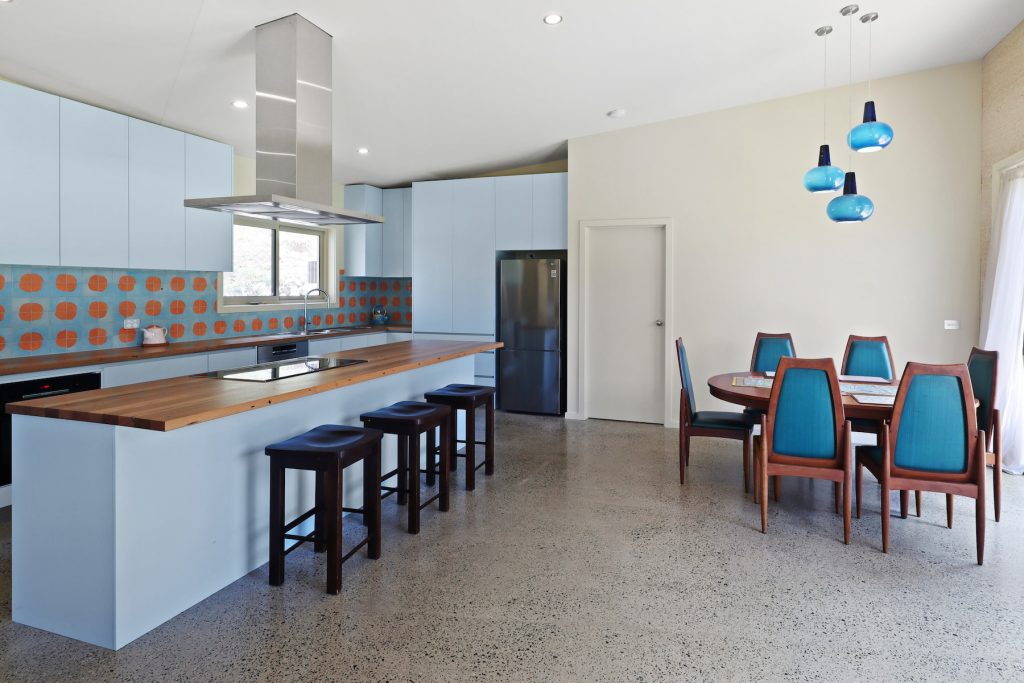
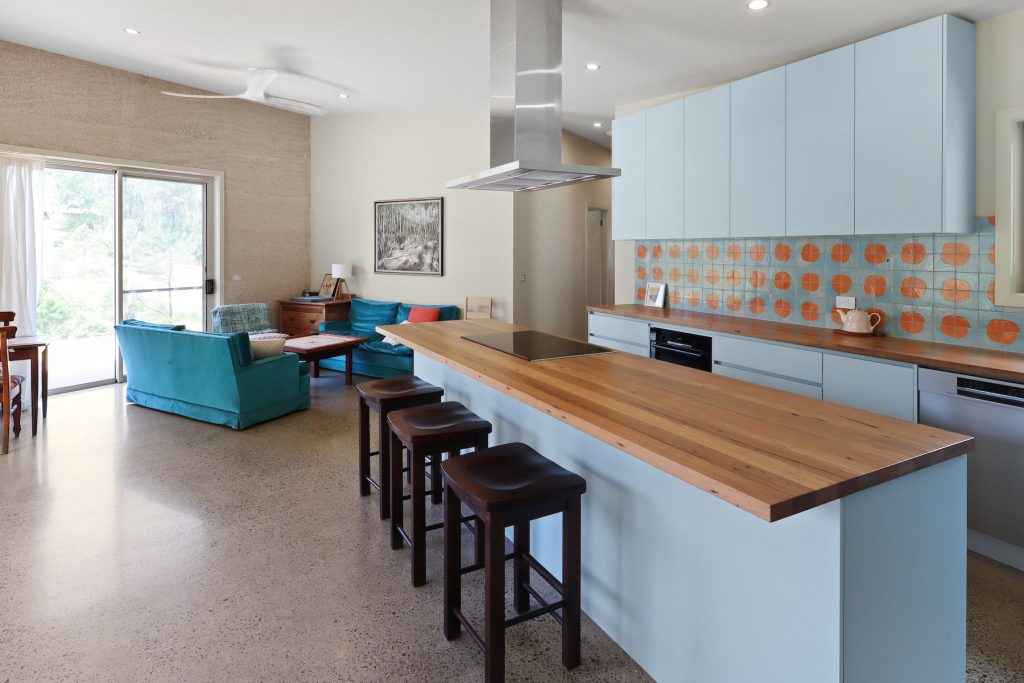
Thermally, the home is equally impressive. Hempcrete’s insulation properties work in tandem with a concrete slab floor that acts as thermal mass. In summer, the slab stays cool and helps regulate indoor temperatures. In winter, low northern sun warms the slab, which then slowly releases heat back into the home.
The result is a house that requires less mechanical heating and cooling, lowering energy bills and improving day-to-day comfort.
Designed to Sit Gently on the Land
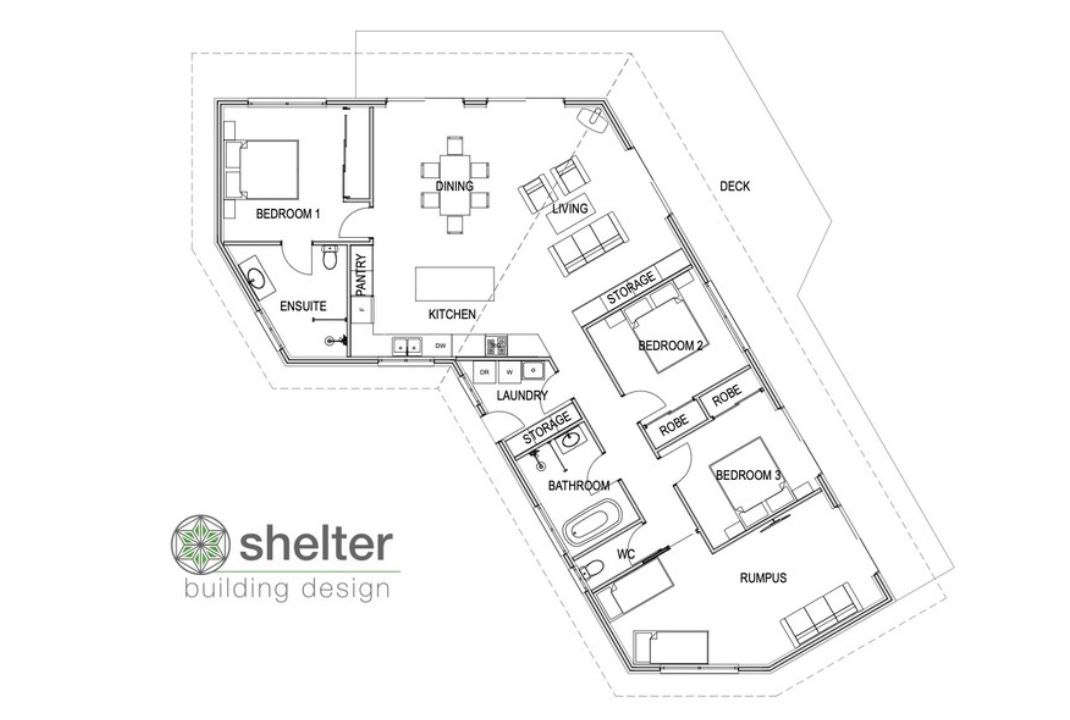
The home’s form responds directly to the site. Its shape and orientation were influenced by the desire to capture northern light, protect from harsh western sun, and frame views across the surrounding bushland. Deep eaves, double-glazed windows, and careful placement of openings all contribute to passive solar performance.
The slightly unusual footprint of the home was also a deliberate decision. Rather than expanding the building envelope into undisturbed bushland, the design was shaped to fit within the area already levelled for the previous house. This allowed the owners to rebuild on previously disturbed ground, minimising further environmental impact while respecting both the site’s constraints and its history.
Water security was also a priority. Multiple rainwater tanks are integrated into the landscape, providing resilience in a region where drought and fire often go hand in hand.
While the bush is still recovering from the fires, life has returned. Cicadas buzz, trees reshoot, and the house now sits quietly within that regenerating landscape, designed to endure rather than dominate.
More Than a House, A Model for Rebuilding
This hempcrete home is significant not because it is experimental, but because it is practical. It shows that rebuilding after disaster does not require sacrificing comfort, safety, or aesthetics—and that natural materials can play a serious role in Australia’s future housing stock.
In fire-affected regions across the country, more homeowners are asking the same questions:
- How do we build homes that are safer?
- How do we reduce long-term energy costs?
- How do we rebuild without locking in high-carbon materials for decades to come?
Projects like this one provide real, built answers.
Designed by Shelter Building Design, and delivered through collaboration with experienced hempcrete installers and builders, this South Coast home demonstrates what “building back better” can actually look like: fire-resilient, comfortable, low-energy, and aligned with the realities of a changing climate.
As Australia continues to adapt, homes like this may well become the benchmark, not the exception.
Gallery – Building Back Better: A Hempcrete Home Designed for Fire

Disclaimer
HBD do not warrant the quality or experience of anyone listed on this directory.
We have relied on the information provided by the business and its representatives.
This site is not intended to provide and does not constitute building advice, or other professional advice.
This is an ad by Google