In this interview, Adam Ragatz Manufacturing Manager at HulkBuild shares an on the ground look at how HulkBuild’s hemp-based boards are moving beyond experimentation and into practical application, particularly for hempcrete builders looking to extend natural material use into cabinetry, internal linings and formwork systems.
Industry momentum and practical alignment
Jeremy Thomas: How’s the hemp wood side of things progressing?
Adam Ragatz:
It’s progressing strongly. What we’re seeing now is a shift from curiosity to real-world integration. Hempcrete builders understand the value of hemp in walls, but they still need solutions for kitchens, cabinetry, wall linings and formwork.
That’s where we fit in.
We’re manufacturing hemp-based structural and interior-grade boards that allow builders to extend the hemp philosophy throughout the entire build, not just the wall system.
Factory capability and supply
Jeremy: What’s happening on the ground at the factory?
Adam:
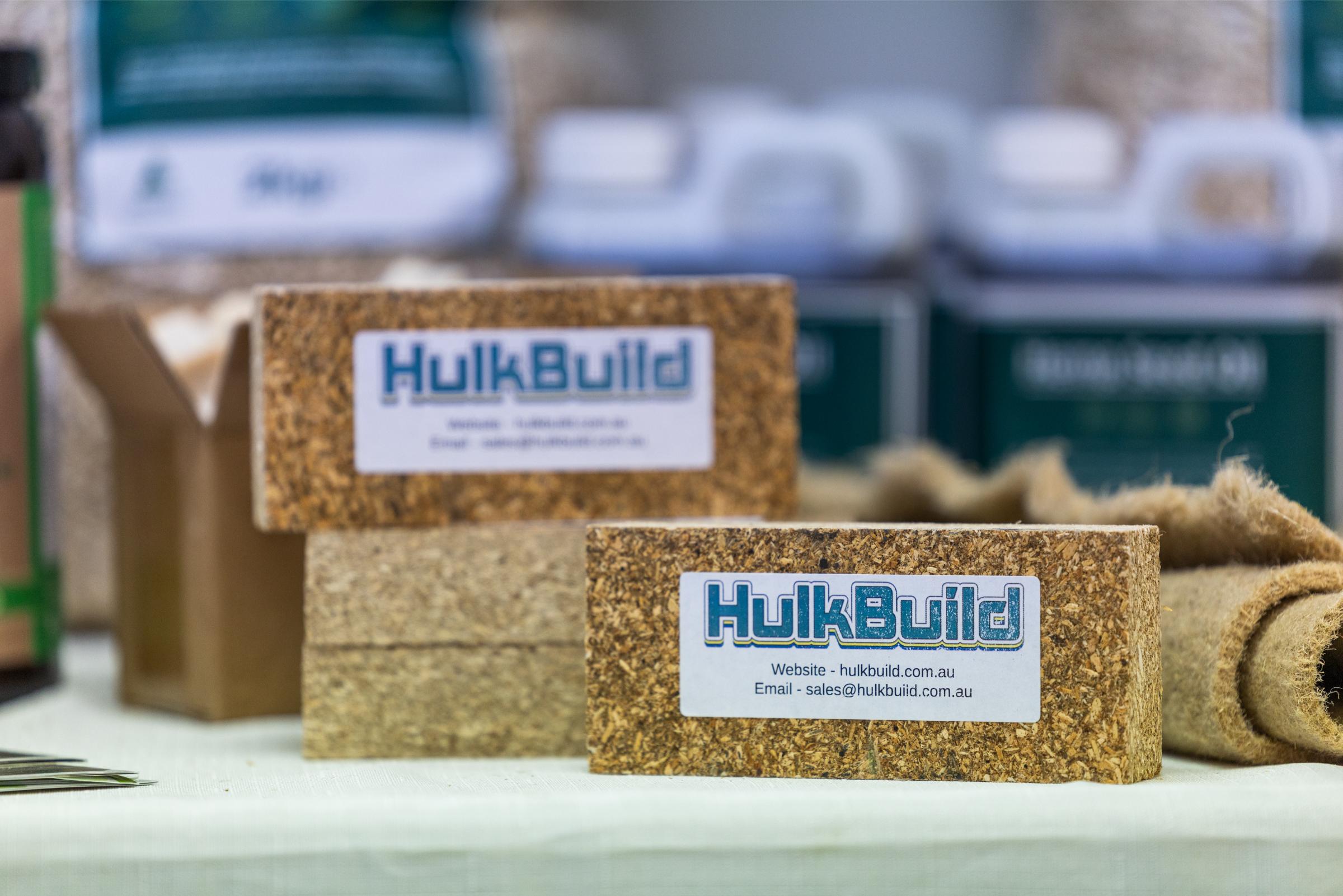
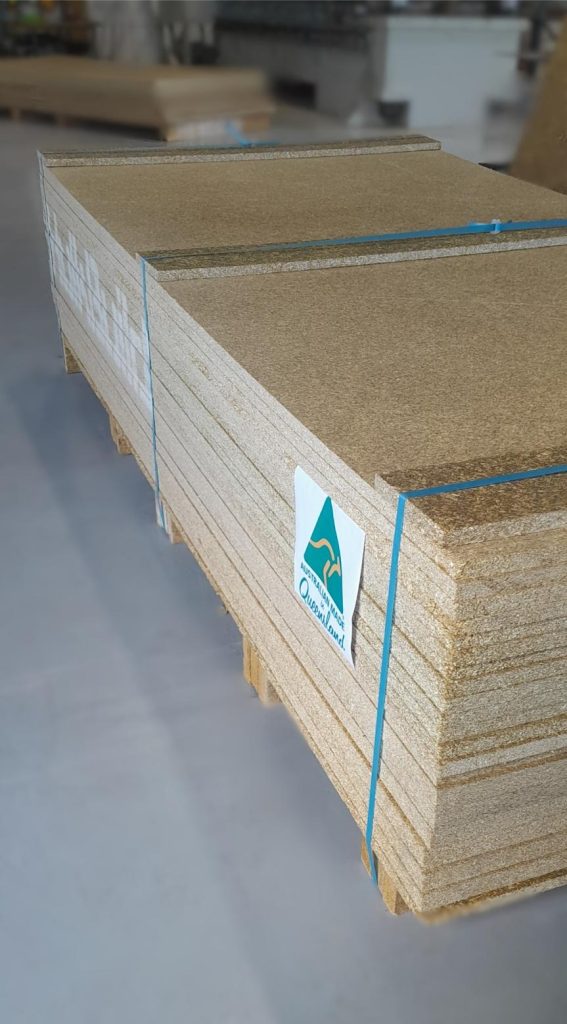
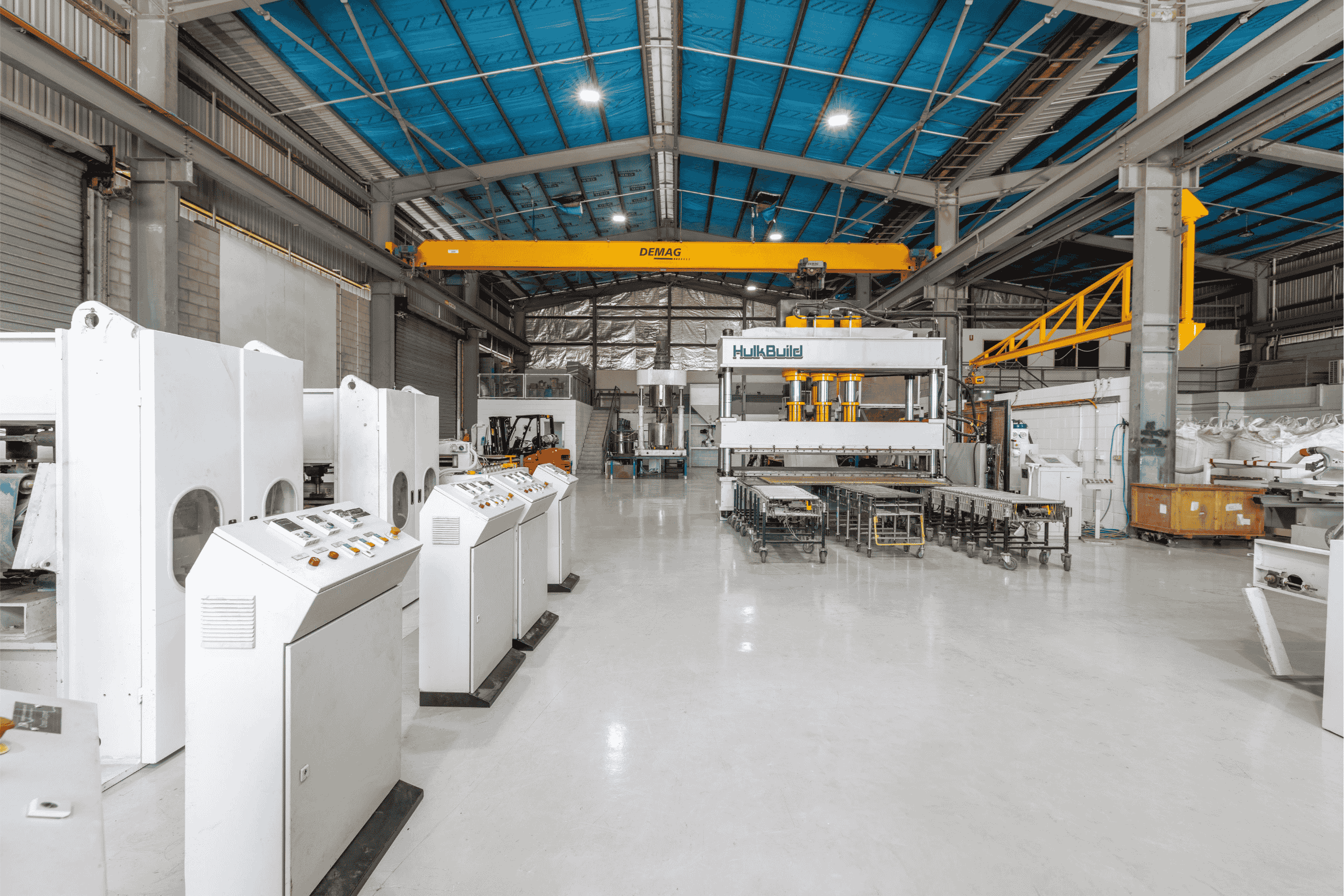
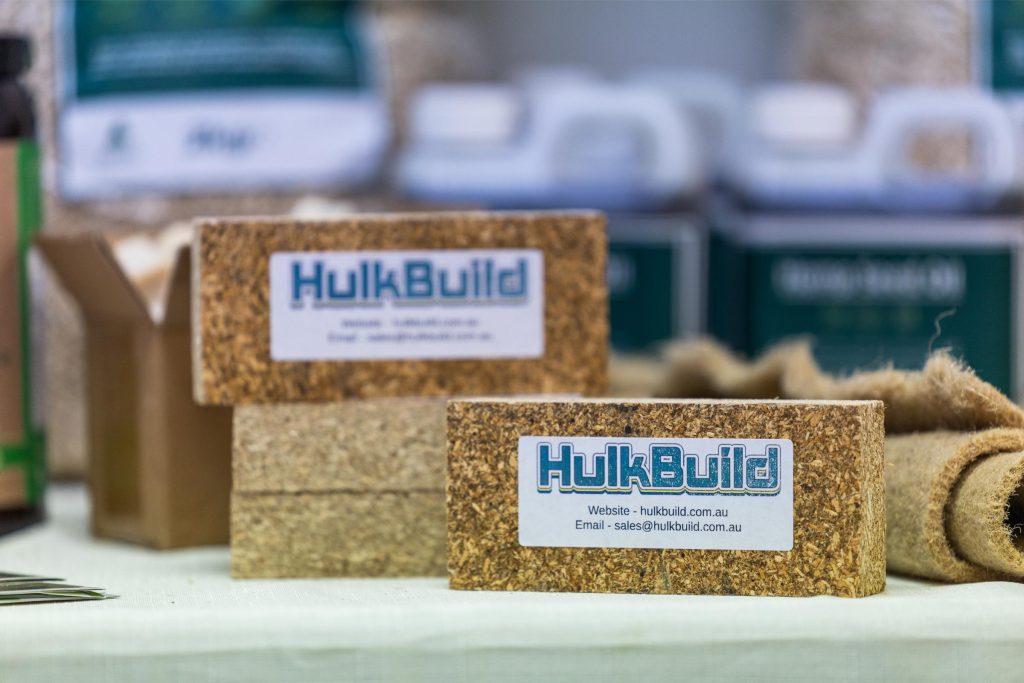
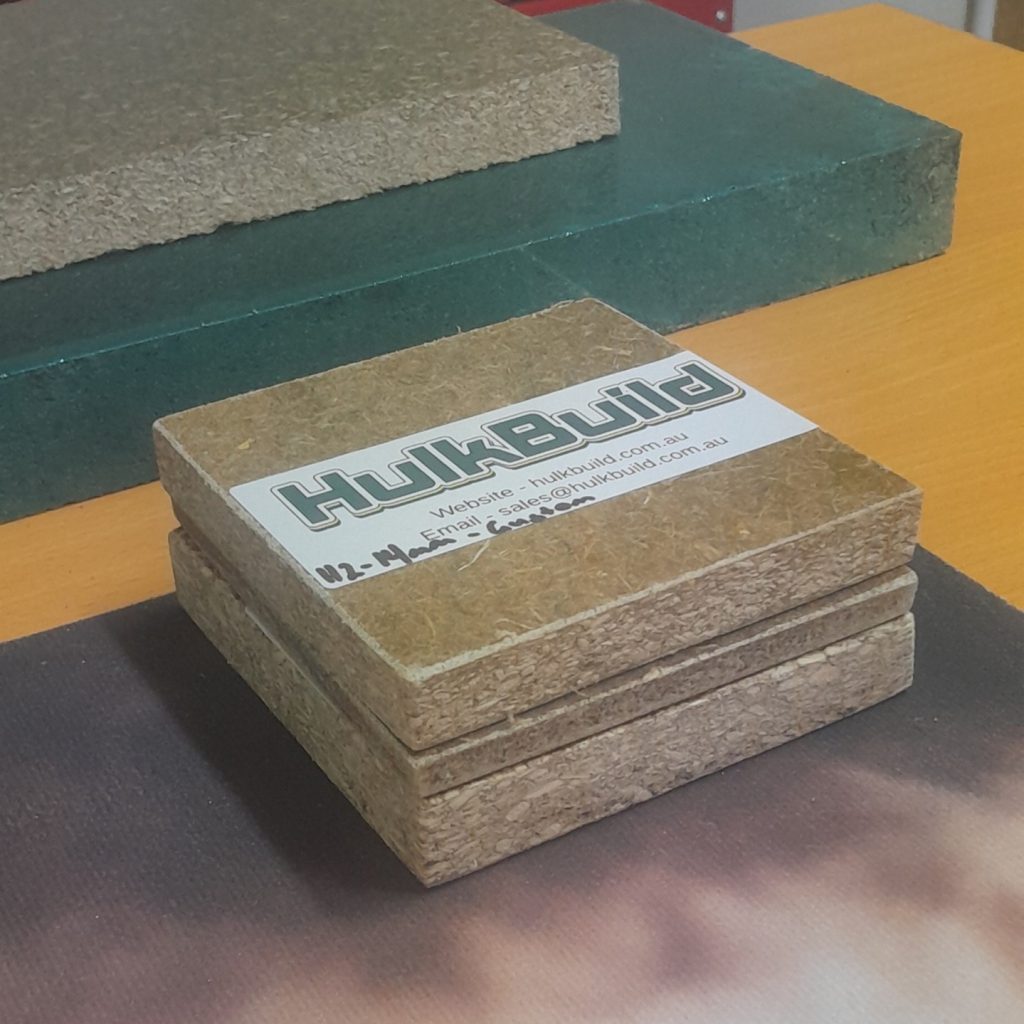
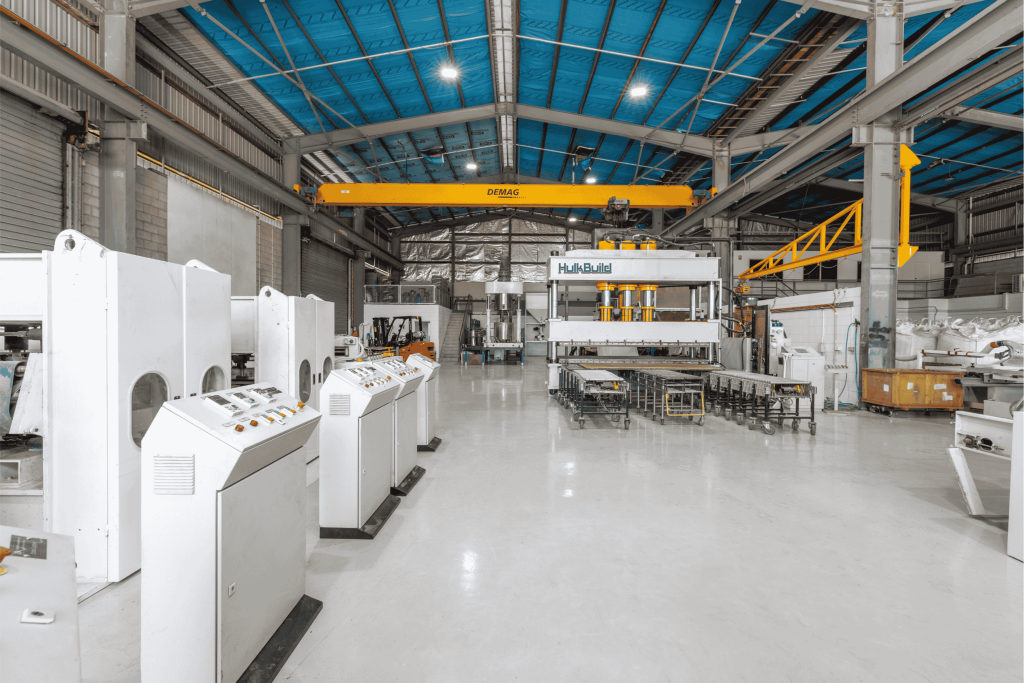
We’re manufacturing out of Townsville and producing boards in standard 2400 x 1200 sheet sizes. Thicknesses range from 12mm to 40mm for hurd-based structural boards (HB, H1, H2), and 1mm to 10mm for fibre-dense panels (HX).
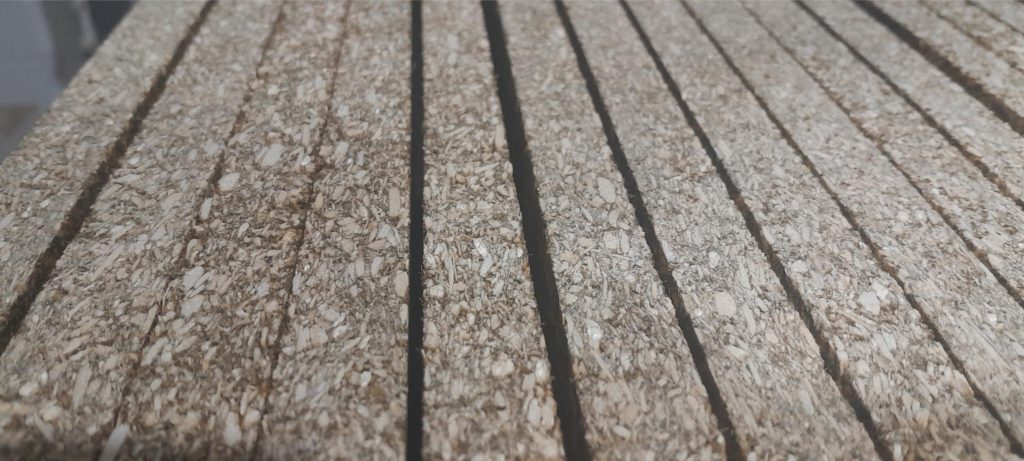
The fibre-only products are dense, strong, and water-resistant, great for decorative linings and interior applications. The hurd-based boards sit closer to particle board in how they’re used, and layered combinations give us performance benefits for structural or panel applications.
We’re commissioning our non-woven processing line, which will expand what we can manufacture. We’ve already got boards in stock and plenty of raw material, along with our growing partners Mulgowie, we have a stable and deep supply chain into the future, so we’re in a good position, now it’s about keeping up with demand and refining our processes.
We’re not just a panel company anymore. We’re learning we need to be adaptable and support a wider range of uses and customers.
We’ve also completed freight trials along the east coast, so supply into Brisbane, Sydney and beyond is proven.
HulkBuild’s Role Within Wandarra
Jeremy: For readers who may not be familiar, how does HulkBuild fit within Wandarra?
Adam:
HulkBuild is a manufacturing arm within the broader Wandarra ecosystem.
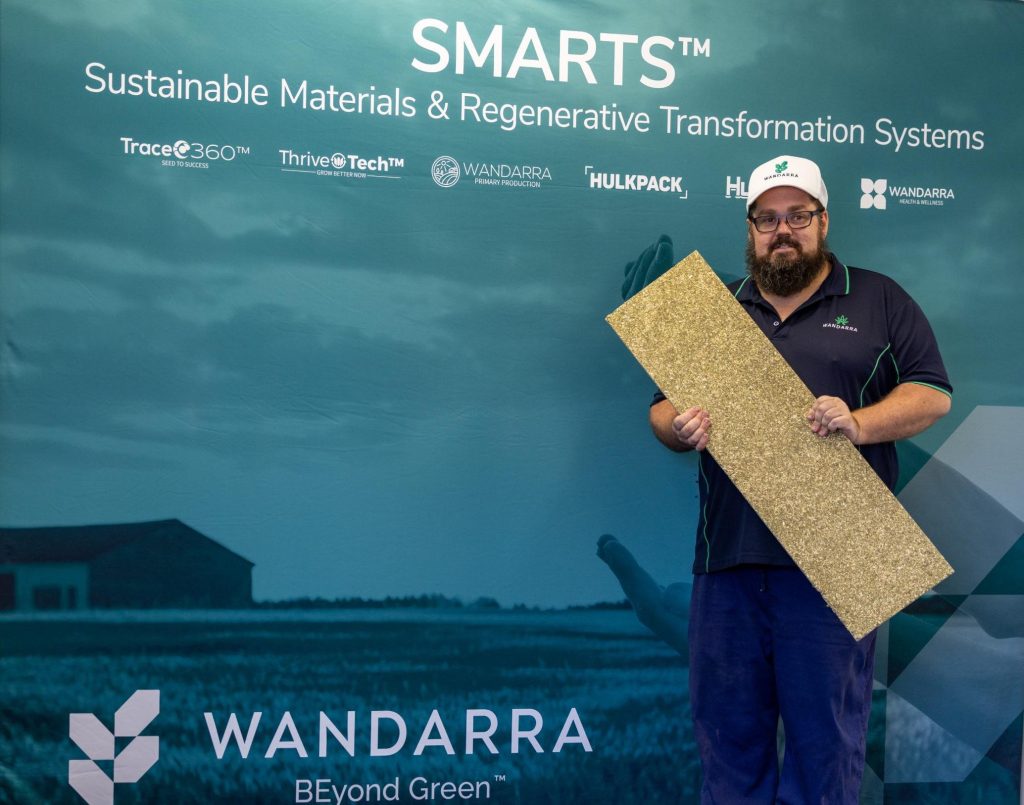
Wandarra’s role is focused upstream, developing the SMARTS™ Sustainable Materials And Regenerative Transformation Systems. Processing pathways and material innovation. HulkBuild sits further downstream, taking that hemp resource and turning it into practical, build-ready sheet materials.
In simple terms, Wandarra is building the systems that make industrial hemp viable at scale, while HulkBuild is one of the manufacturing arms focused on converting that material into products in this case that the construction and joinery industries can actually use today.
That alignment is important. It means we’re not just producing boards in isolation, we have visibility from crop through to finished product. It allows us to think long-term about material performance, supply stability and how hemp-based systems can integrate into real-world construction.
For builders and manufacturers, the goal is straightforward: reliable, consistent, bio-based materials that fit into existing workflows.
Kitchens and Cabinet Making
Jeremy: How do the boards perform in cabinetry applications?
Adam:
They behave very similarly to MDF or particleboard, but with a hemp-based substrate.
You can CNC them, route them, screw into them, install hinges and hardware, and glue veneer directly onto them.
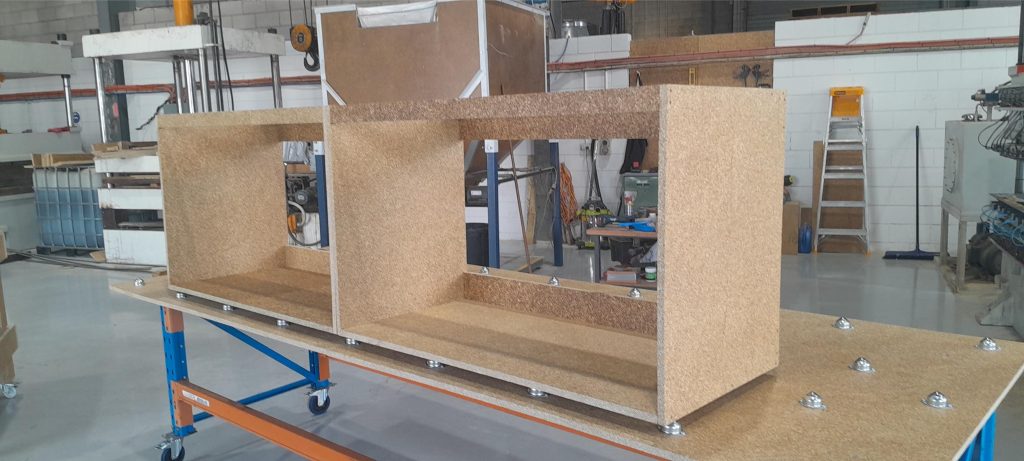
We’ve built full cabinetry systems, drawers and veneered bench tops using standard woodworking tools.
For hempcrete builders, this means you can offer kitchens and joinery that align with the rest of the natural build, rather than reverting back to conventional substrates.
We’re also experimenting with thinner formats that could be used like floating flooring or parquetry-style applications. The possibilities are huge, it comes down to imagination and testing.
Internal Wall Paneling
Jeremy: Where do they fit in internal finishes?
Adam:
Many hempcrete builds still finish internally with plasterboard or synthetic sheet products. Our thinner panels offer an alternative internal lining solution that fits within a bio-based material philosophy.
They can be painted, veneered, used as decorative feature walls, or CNC-profiled for architectural detail.
They’re dense, stable and moisture-resistant, making them suitable for varied climates.
Using H1 & H2 as Formwork
Jeremy: What about structural site applications?
Adam:
For in-situ hempcrete builders, traditional form ply is petroleum-based and often disposable.
Our H1 and H2 boards are dense and moisture-resistant, and in many scenarios can be used as reusable formwork alternatives.
This keeps the material language consistent across the project and reduces reliance on conventional materials.
Finishing and Surface Treatments
Jeremy: How do they handle finishing?
Adam:
We’ve glued timber veneer directly to the boards using standard wood glue, with no special surface prep required.
They take paint well with standard primer and topcoat systems, and we’ve successfully applied epoxy coatings for high-gloss architectural finishes.
From a trades perspective, there’s no steep learning curve.
Real testing, not theory
Jeremy: You’re doing a lot of hands-on experimentation.
Adam: That’s the only way. You can’t get to the tenth idea without building the first. Every test, cabinetry, beams, flooring concepts, feeds the next.
Many of our trials come directly from industry questions. Someone asks, “Can this be painted?” or “Will vinyl stick?” and we go test it. Then we know for sure.
We’re not relying on polished marketing or AI visuals. Everything we show is real work from the factory floor.
Building knowledge and industry confidence
Jeremy: What will help adoption?
Adam: Practical content. How-to videos, real projects, real data. People want to see how materials behave before committing.
We’re developing more documentation and demonstrations across platforms like Wandarra and Hulk Build, so professionals can see how the products work in real scenarios.
The interest is already there. Now it’s about education, proof, and continued development.
Beyond panels: prefabrication and housing potential
Jeremy: Where does this lead next?
Adam: Panels are just the beginning. There’s a logical next step into more processed or pre-cut systems, potentially flat-pack components or prefabricated solutions.
With the housing crisis, there’s real demand for new approaches. It’ll take time, but we’re working toward practical solutions.
Final Thoughts for HBD Subscribers
Jeremy: What would you say directly to hempcrete builders?
Adam:
If you’re building with hempcrete, you already understand the value of natural materials.
Now it’s about extending that thinking into kitchens, internal linings, joinery and formwork systems.
HulkBuild isn’t here to replace hempcrete, it’s here to complement it.
We’re manufacturing the sheet material layer that helps complete the hemp-based building system.
Jeremy’s Summary:
Hemp boards are moving from niche experimentation into practical manufacturing and real-world application. With stock available, active testing underway, and new processing capabilities coming online, the sector is edging closer to scalable building and interior solutions.
HulkBuild Hemp Fibre Boards Gallery
Disclaimer
HBD do not warrant the quality or experience of anyone listed on this directory.
We have relied on the information provided by the business and its representatives.
This site is not intended to provide and does not constitute building advice, or other professional advice.
This is an ad by Google