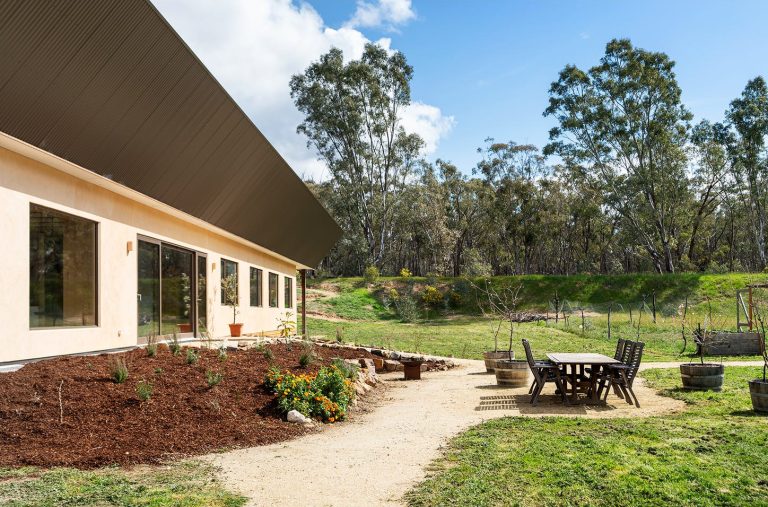
A tiny hemp-lime building with big lessons for comfort, health and low-impact design
The best spaces are made with love and care. Built from natural materials. Shaped by your own hands.
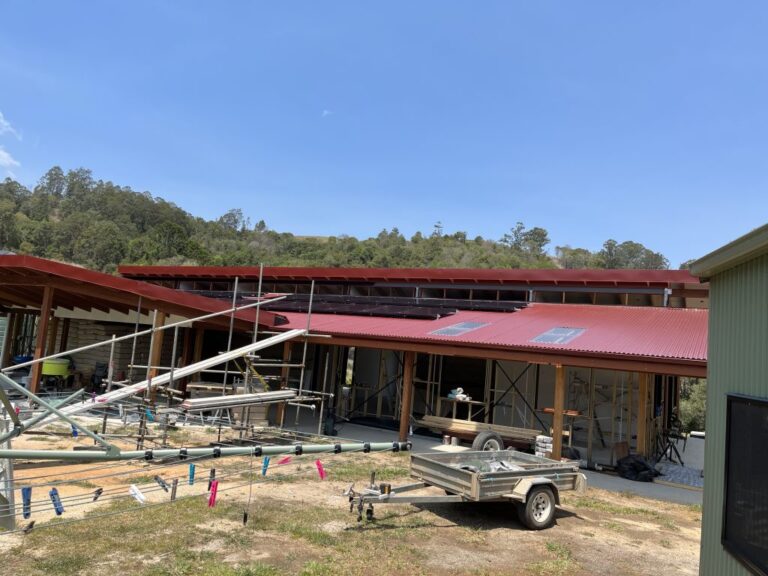
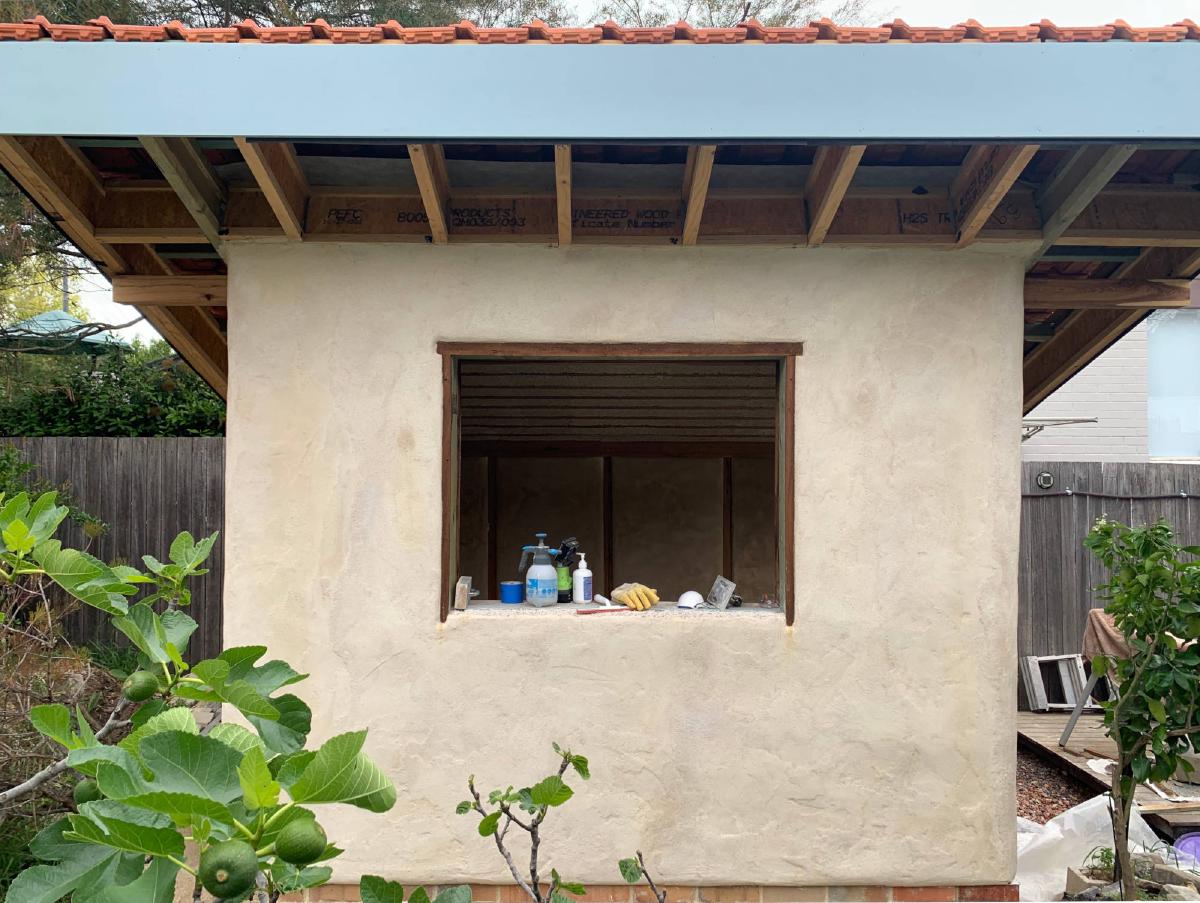
In 2025, Felix Andrews built a tiny hemp-lime hut for just $11,000. It’s not a gimmick. It’s not a “look at me” eco experiment. It’s a practical, comfortable, durable space designed by someone who understands building physics inside out, and wanted to test what really matters.
This is the story of A Lime Sublime Hemp Hut.
Who is Felix Andrews?
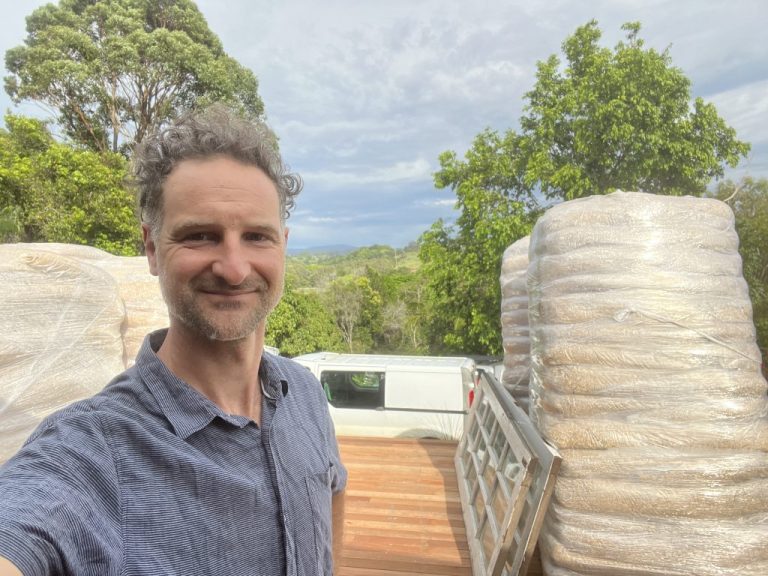
Felix Andrews from Thermal Integrity isn’t a weekend hobbyist guessing his way through sustainability.
He’s a NatHERS Thermal Performance Assessor, having modelled and optimised hundreds of house designs across Australia. He’s also worked as a Residential Efficiency Scorecard Assessor for existing homes. His background includes software development, data visualisation, scientific modelling and teaching.
In short: he understands thermal performance both on screen and in real life.
This hut was a chance to bring theory into practice, to create a comfortable, healthy, durable, low-impact, and genuinely delightful living space.
Design: Start With Performance
The design goal wasn’t aesthetics first. It was performance first.
Comfort. Health. Durability. Low embodied impact. Simplicity.
Every decision flowed from those priorities. Instead of chasing size, the focus was on thermal integrity, improving energy efficiency, comfort and indoor health through material choices and detailing.
Small buildings are unforgiving. Get the fundamentals wrong and you feel it immediately. That’s exactly why this hut is such a powerful case study.
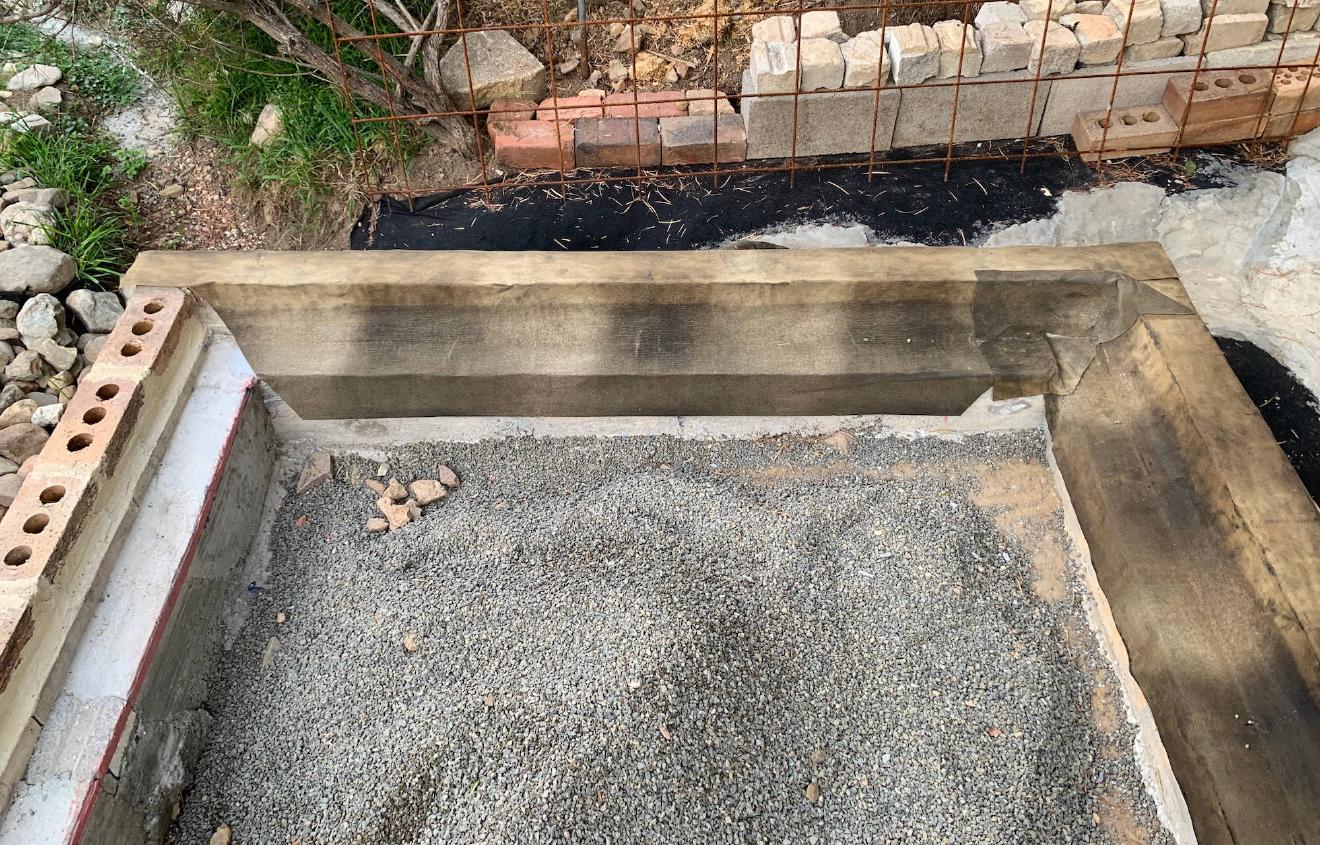
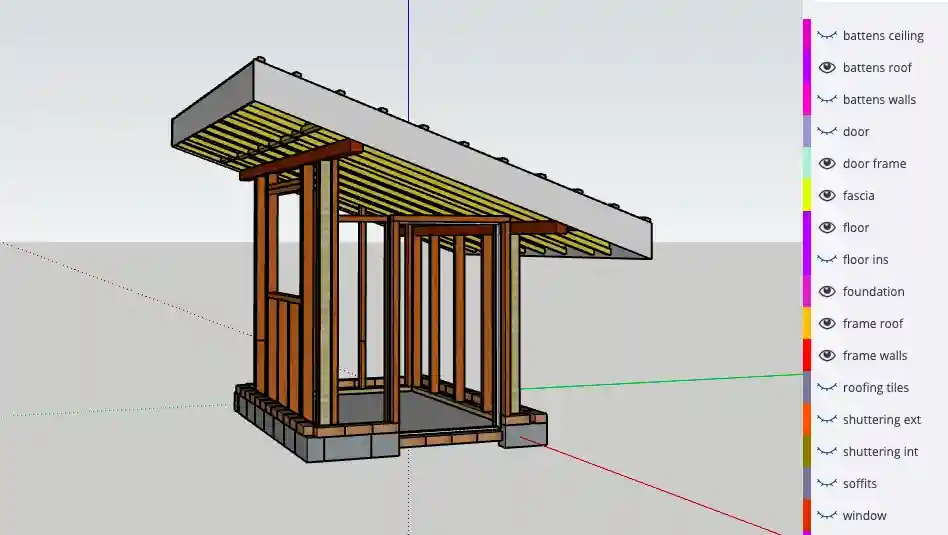
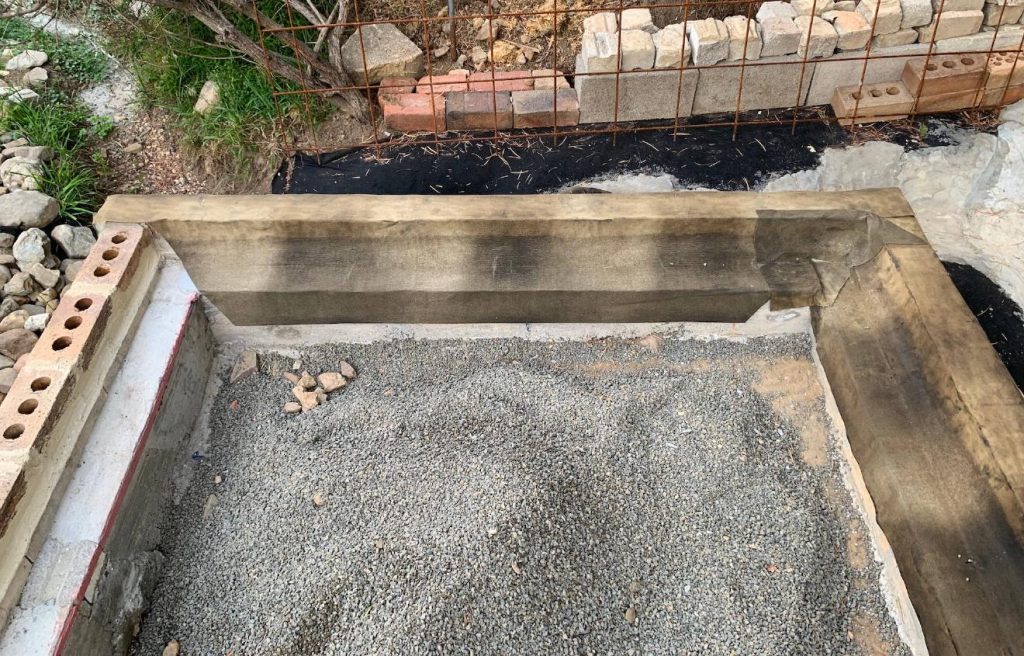
Foundations: Good Boots
Foundations need to:
- Hold up the walls
- Keep out surface water
- Avoid excessive heat loss
Felix treated the foundation like good boots: practical and protective.
The aim wasn’t complexity, it was thermal continuity and moisture management. That thinking shows up again and again throughout the build.
Framing: Simple, Straight Enough
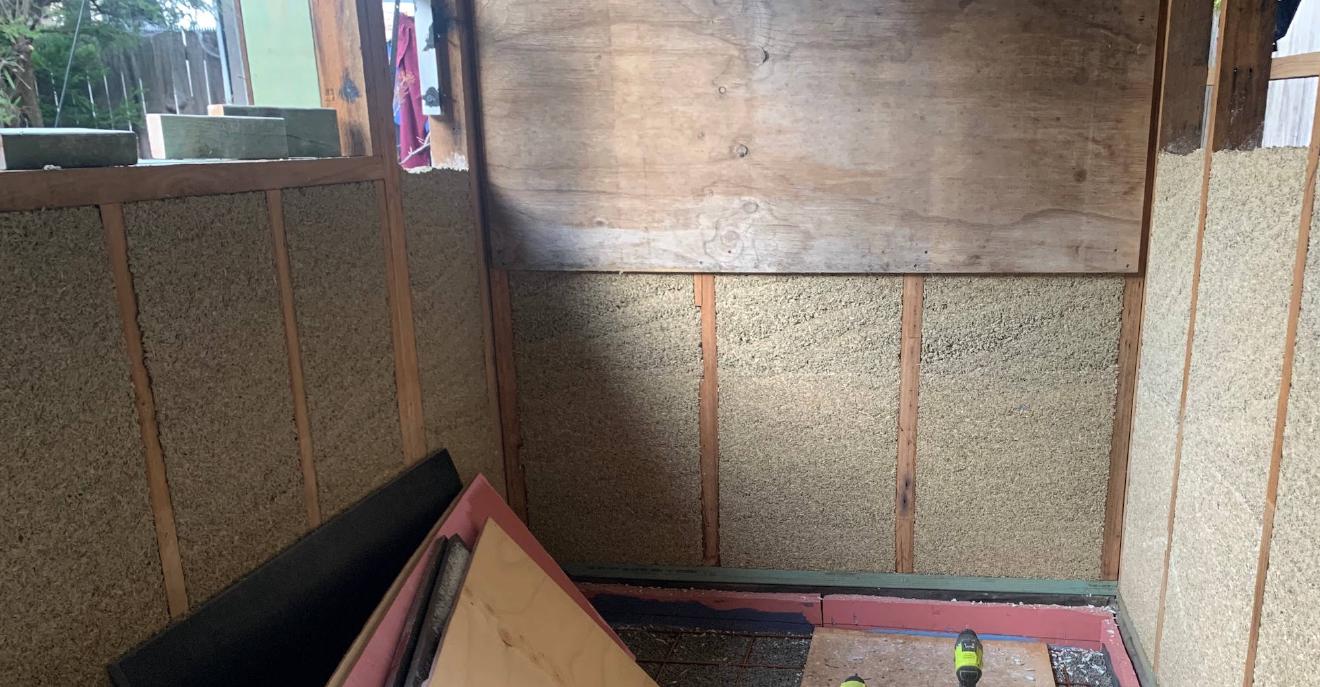
The walls and roof are timber framed. Some recycled. Some engineered.
Nothing fancy. Just straight enough to do the job well.
The key insight? The frame is not the star of a hemp-lime building. It’s the support act. The real performance layer is what comes next.
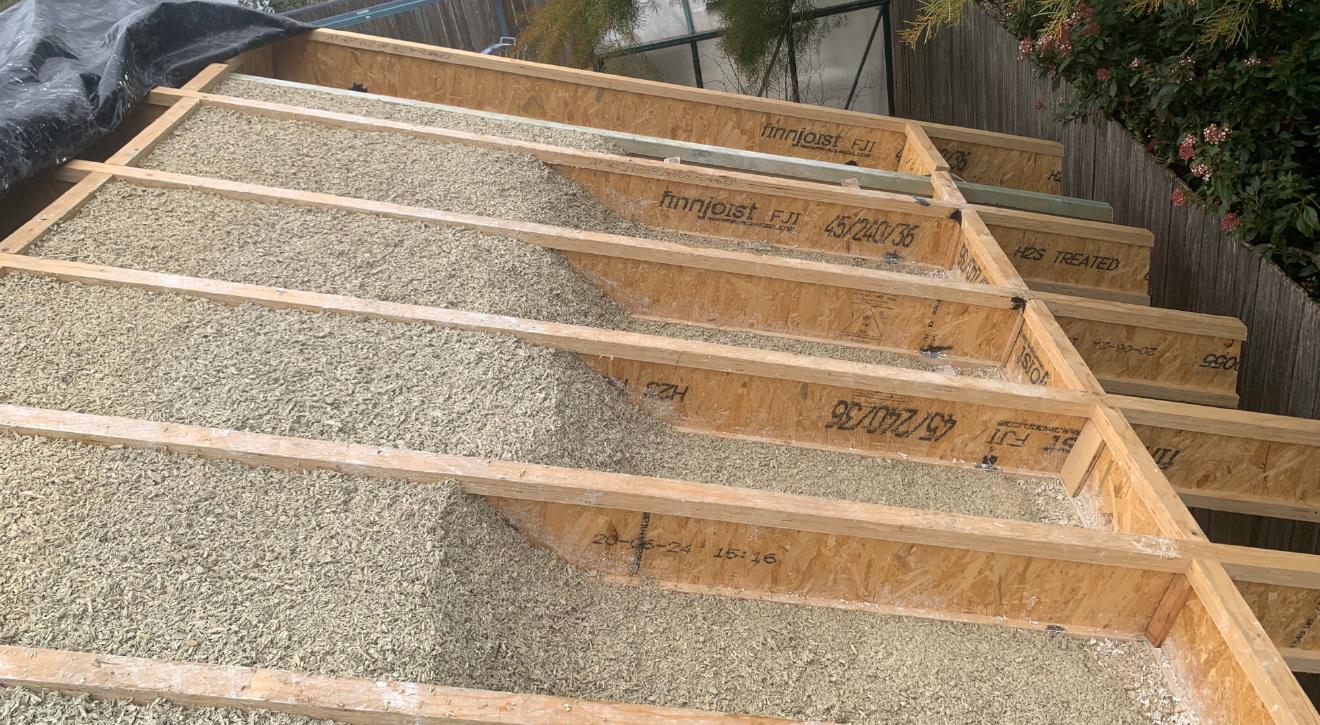
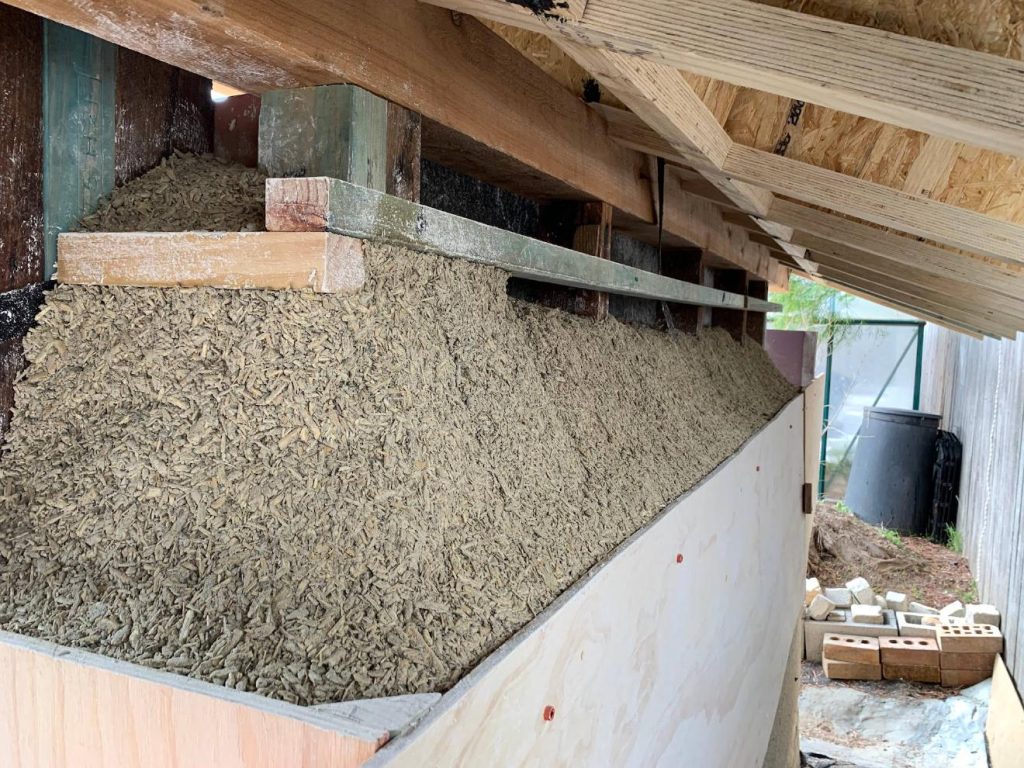
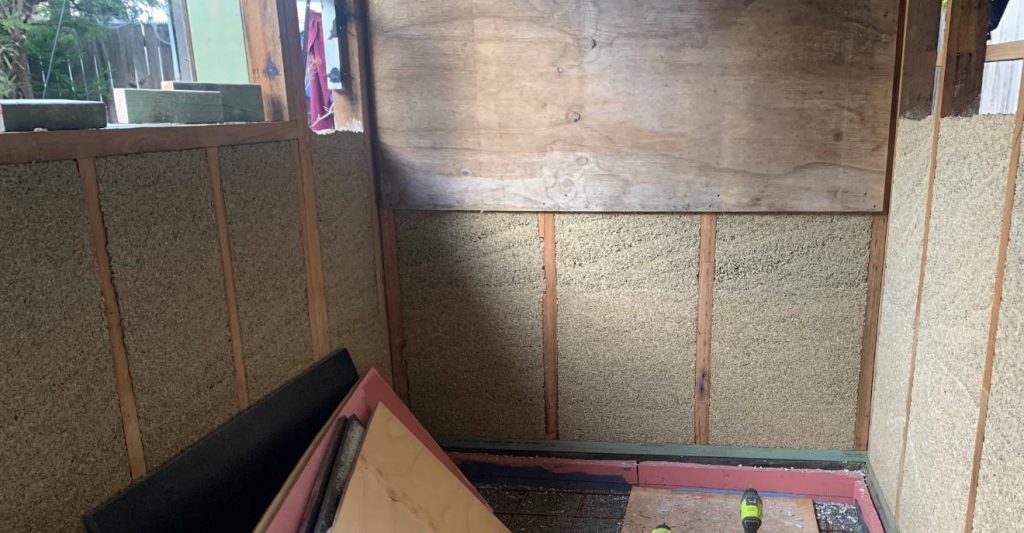
Hempcrete: A Continuous 250mm Shell
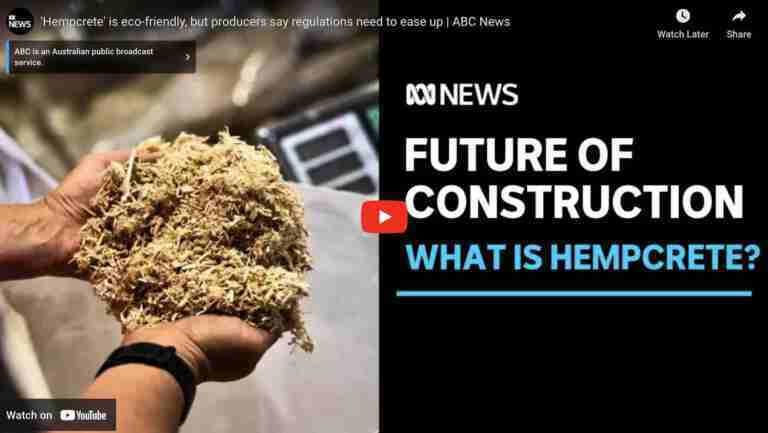
The heart of the project is the hempcrete.
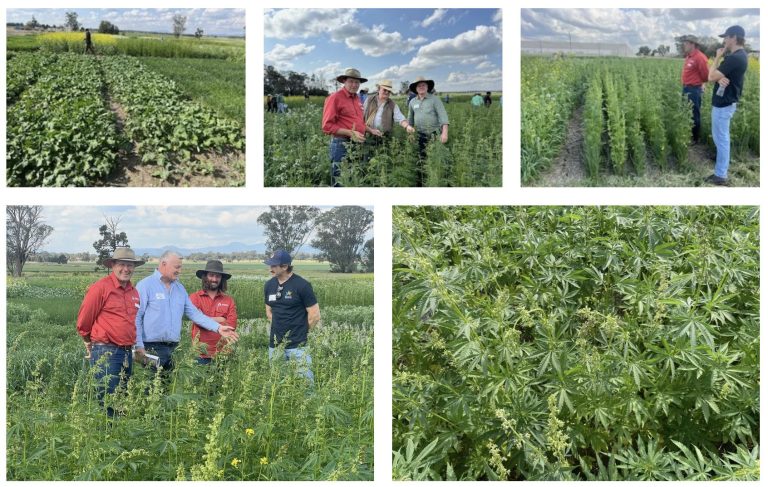
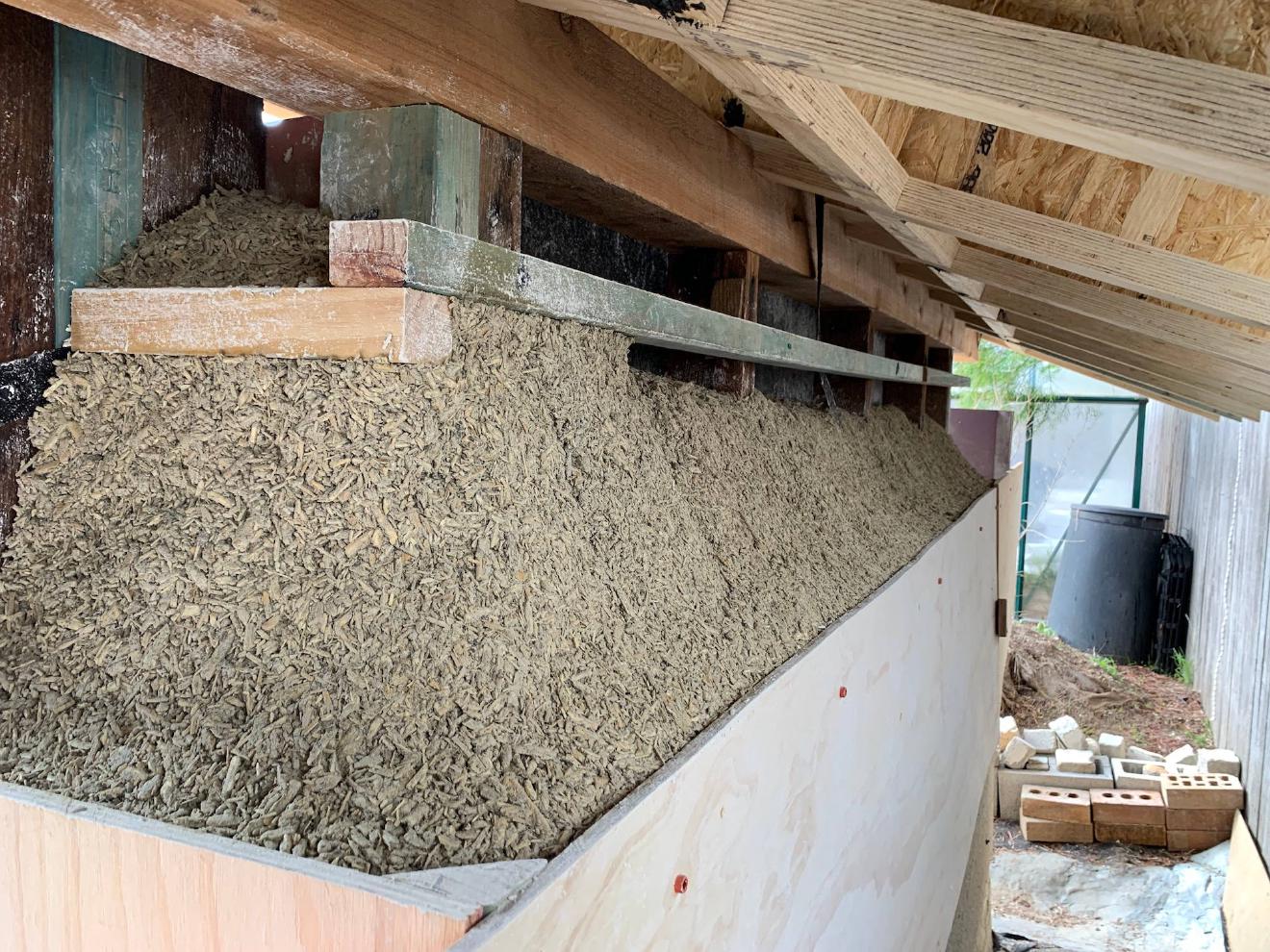
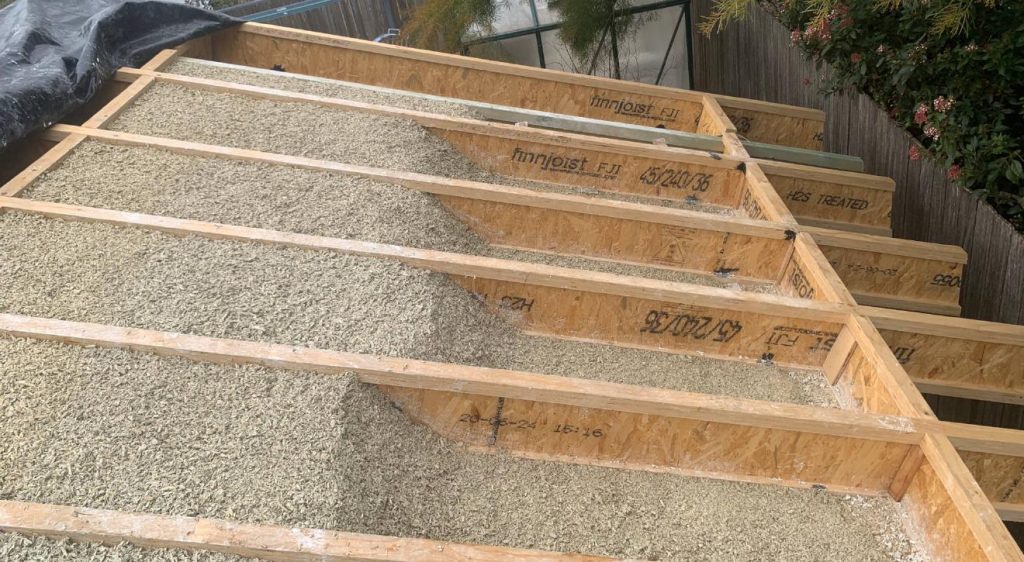
Hemp hurds mixed with lime were packed into the walls and roof, forming a continuous 250mm thick shell.
This creates:
- Thermal mass
- Insulation
- Vapour permeability
- Acoustic softness
- Carbon storage
Unlike conventional walls made of multiple layers trying to solve different problems, hempcrete works as a system. It buffers temperature swings. It manages moisture naturally. It avoids the condensation traps common in modern lightweight construction.
For someone deeply experienced in modelling thermal performance, this wasn’t theoretical. It was deliberate.
Roofing: A Good Hat
Felix describes the roof like a good hat:
- Keep out rain
- Block harsh summer sun
- Don’t trap humidity
Roofing decisions were made to complement the breathable hemp-lime envelope rather than fight it. Too often, roofs undermine otherwise good wall systems. Here, integration mattered.
Rendering: Lime Inside and Out
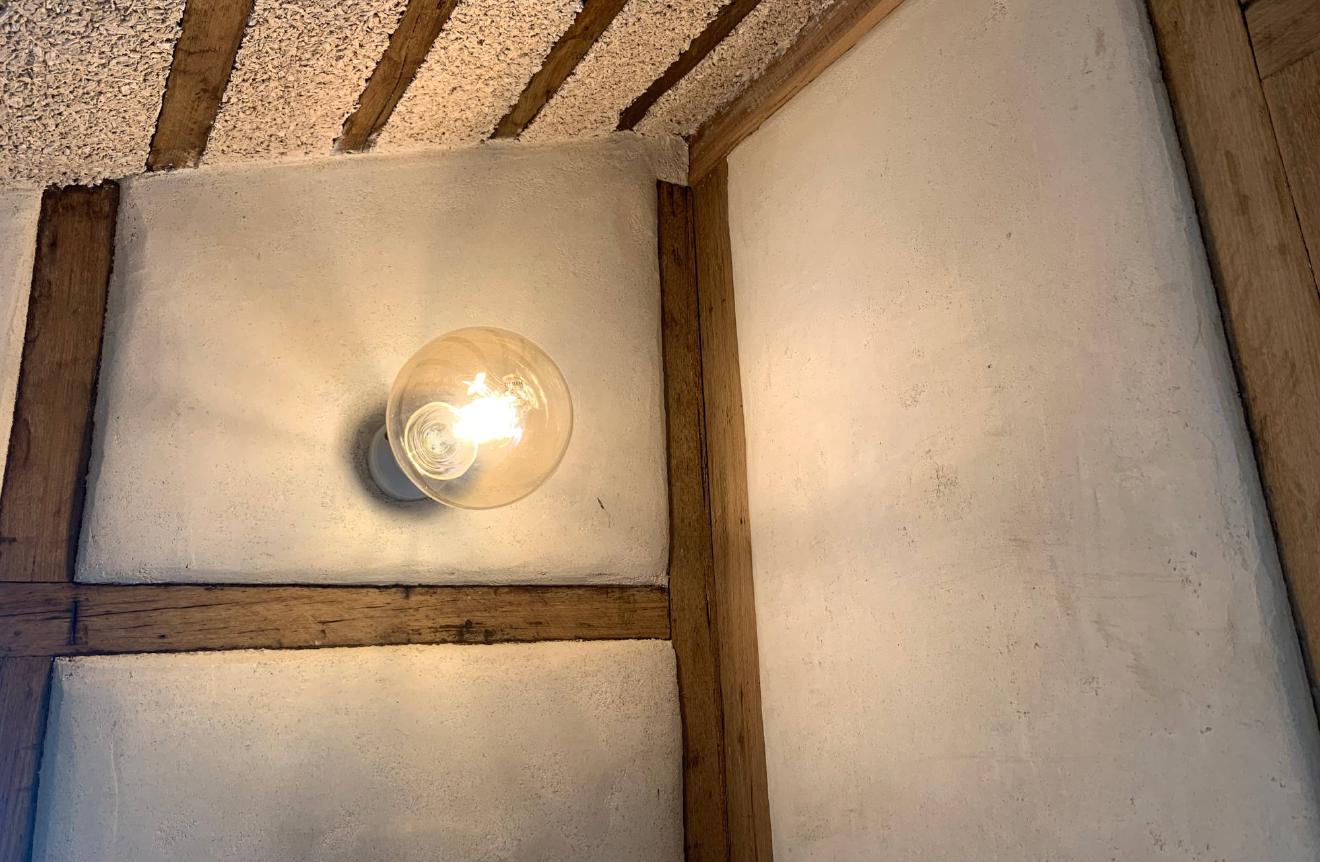
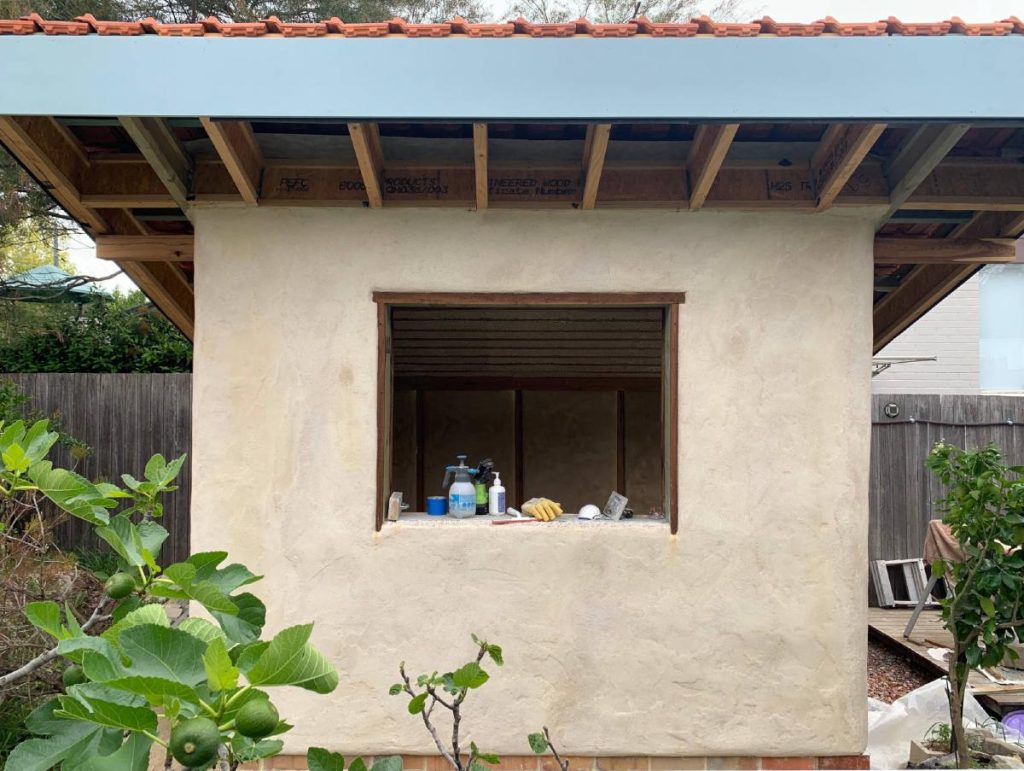
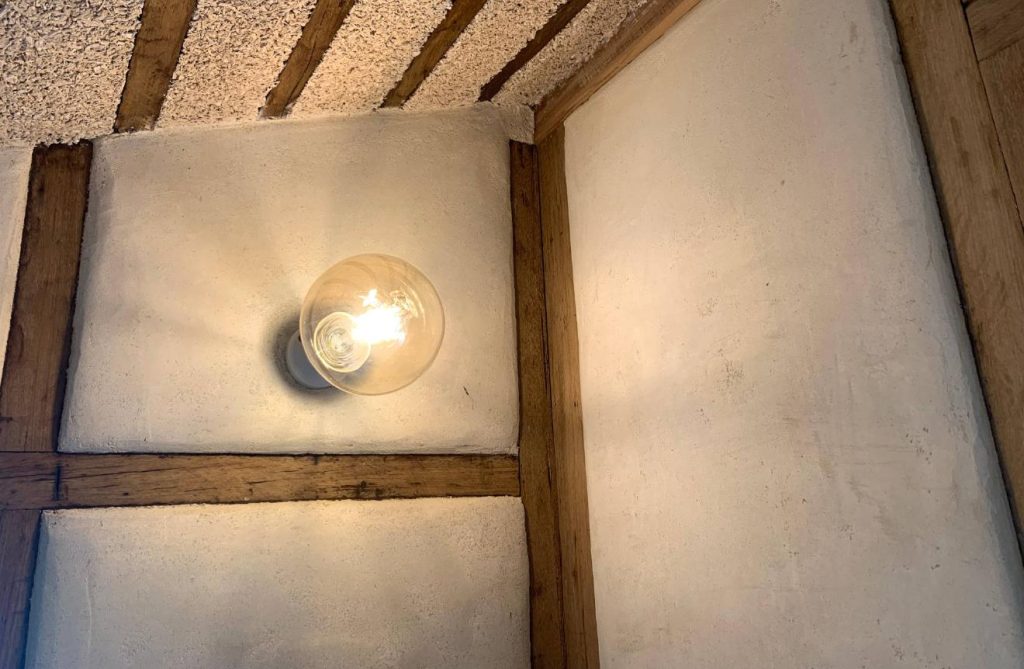
Both the exterior render and interior plaster use a traditional lime and sand mix.
Why lime?
- It stays vapour permeable
- It supports the hemp-lime system
- It ages gracefully
- It can be repaired, not replaced
The finish isn’t sterile. It has character. Texture. Softness. You feel the difference when you step inside.
Floor: Insulated Limecrete + Slate
The floor is insulated limecrete finished with slate tiles.
Again, it’s a natural system approach:
- Thermal mass
- Insulation
- Durability
- No plastic membranes fighting moisture dynamics
It’s simple, but deeply considered.
Door & Window: Thrifted Luxury
One insulated door. One uPVC window.
Not extravagant. Just effective.
Performance where it counts. Restraint where it doesn’t.
Details Matter (And So Does Budget)
The full materials schedule and costing show something important:
This hut was built for $11,000.
That number matters.
It demonstrates that:
- Natural building isn’t automatically expensive
- Small, well-designed spaces outperform oversized homes
- Knowledge reduces waste
This isn’t about romanticising DIY. It’s about intelligent simplicity.
The Honest Bit: Ventilation Fan (Oops)
One update came after completion:
Fresh air.
Even breathable buildings need managed ventilation. Felix later added a ventilation fan, a good reminder that performance is holistic.
No building material replaces the need for proper air exchange.
Why This Matters
For the hemp building community, and anyone interested in high-performance, low-impact design, this hut proves something powerful:
You don’t need a 7-star mansion to demonstrate thermal integrity.
You need:
- Good design
- Moisture-aware detailing
- Natural materials used correctly
- And a willingness to test your own assumptions
Felix modelled hundreds of homes. Then he built one.
That’s integrity.
And that’s why A Lime Sublime Hemp Hut deserves attention.
Gallery – A Lime Sublime Hemp Hut
Disclaimer
HBD do not warrant the quality or experience of anyone listed on this directory.
We have relied on the information provided by the business and its representatives.
This site is not intended to provide and does not constitute building advice, or other professional advice.
This is an ad by Google